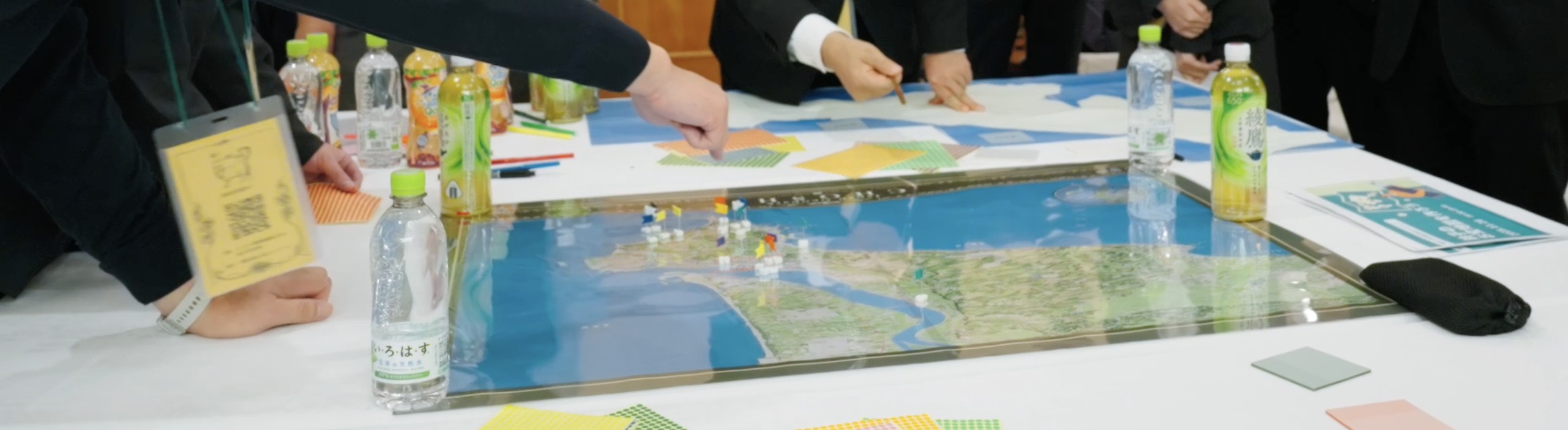
The "Choshi Iine! Kaigi" (Choshi Community Conference) is a regional revitalization project led by Morokami Seminar. Based in Choshi City, Chiba Prefecture, the project brings together university students and local residents — especially younger community members — and businesses to explore the tourist potential of local resources and the formation of Choshi's regional brand.
The project was launched in 2025 together with local stakeholders who were concerned about Choshi's future — a community rich in resources yet facing declining population and an aging society. Through ongoing fieldwork and workshops, we aim to revitalize the Choshi region with a long-term perspective.
What participants gain
New connections in town
You meet people you would never encounter through work — different ages, different worlds. It has become a place for people returning to Choshi, or newcomers, to build new bonds in the community.
Rediscovering Choshi's appeal
Seeing familiar scenery through the eyes of students from outside the community makes it feel fresh again. Many participants say, "I was reminded just how good Choshi really is."
Business & recruitment value
Deepening your understanding of Choshi can open new ideas for your business or daily life. It is also an opportunity to promote your company to younger generations — useful for retaining and attracting young talent.
Team building & staff development
Company groups are welcome. Fieldwork and group activities can serve as a development program that builds dialogue among staff and deepens their attachment to the region.
Workshop Sessions

Morokami & Kogure Seminars
Tairyo-bushi
At the opening ceremony, following the declaration by President Araya, the concealed "Choshi Iine! Kaigi" tairyo-ki — a traditional flag flown to celebrate a great catch — was raised at the centre. The flags of Morokami Seminar and Kogure Seminar followed on either side, to loud cheers from the students.
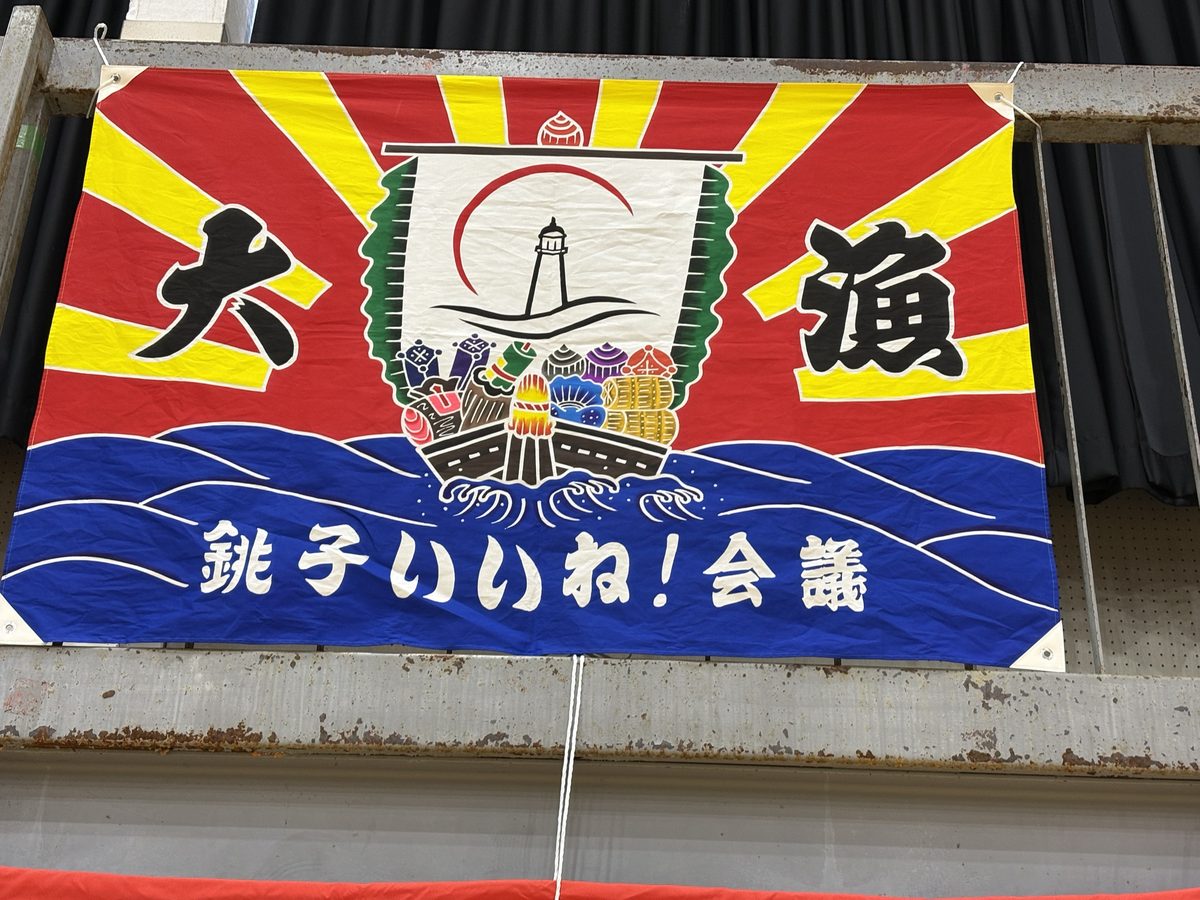
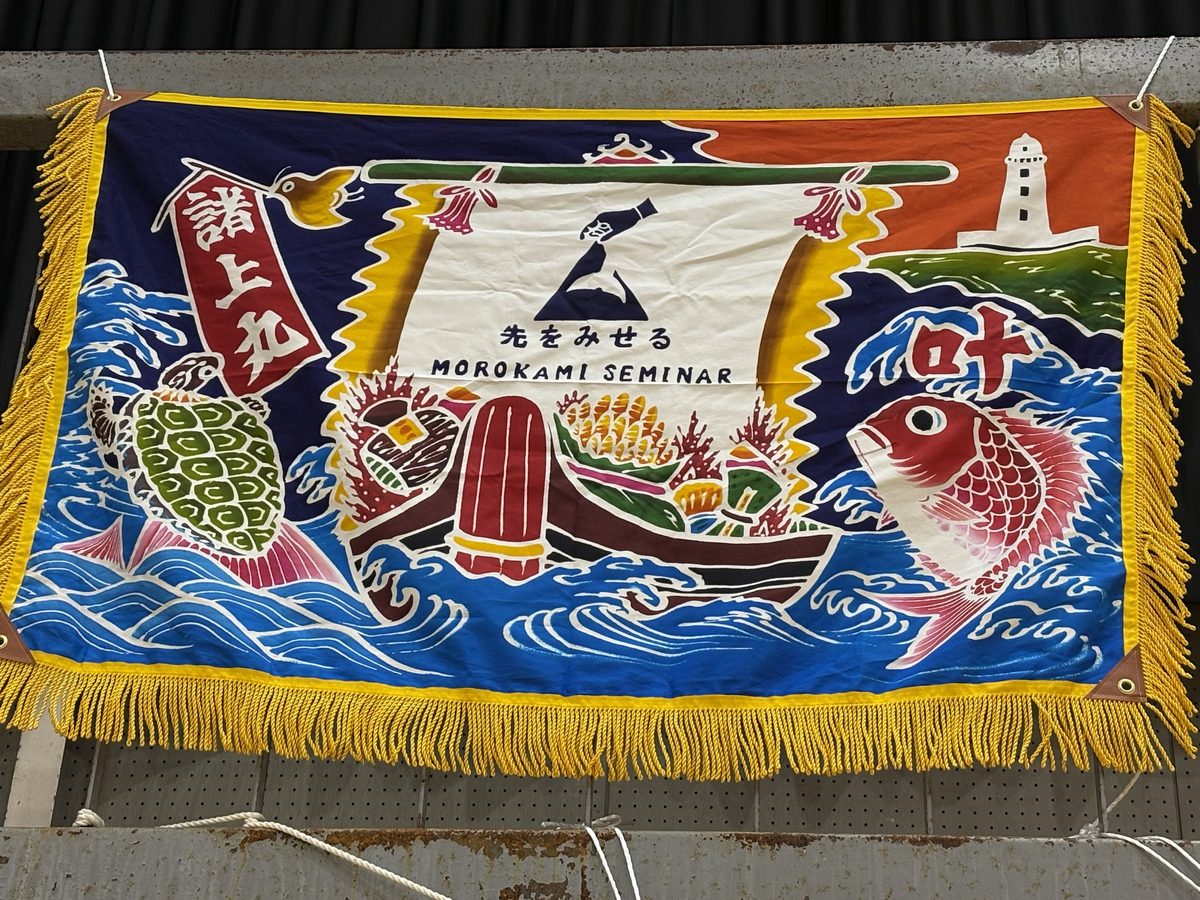
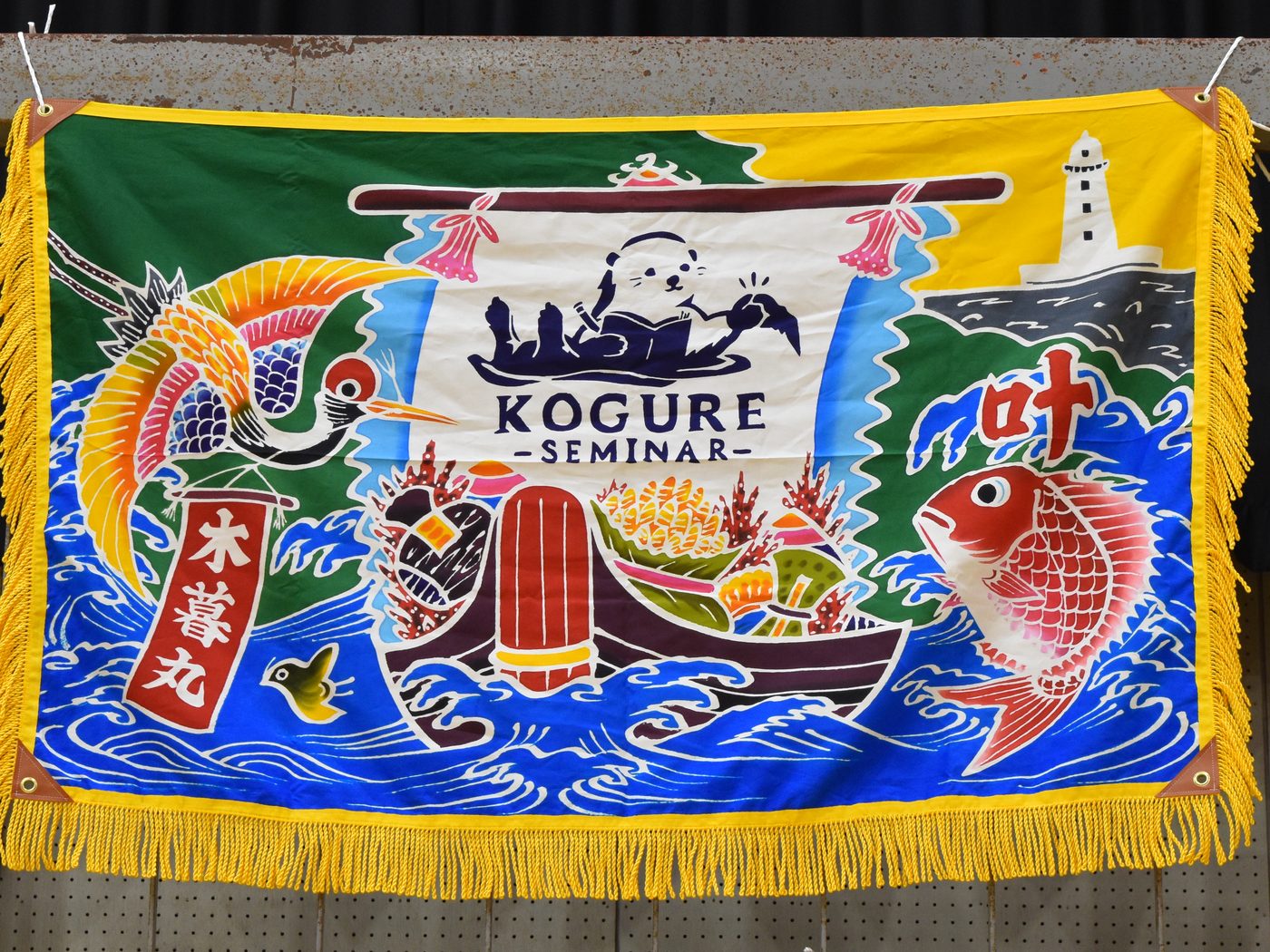
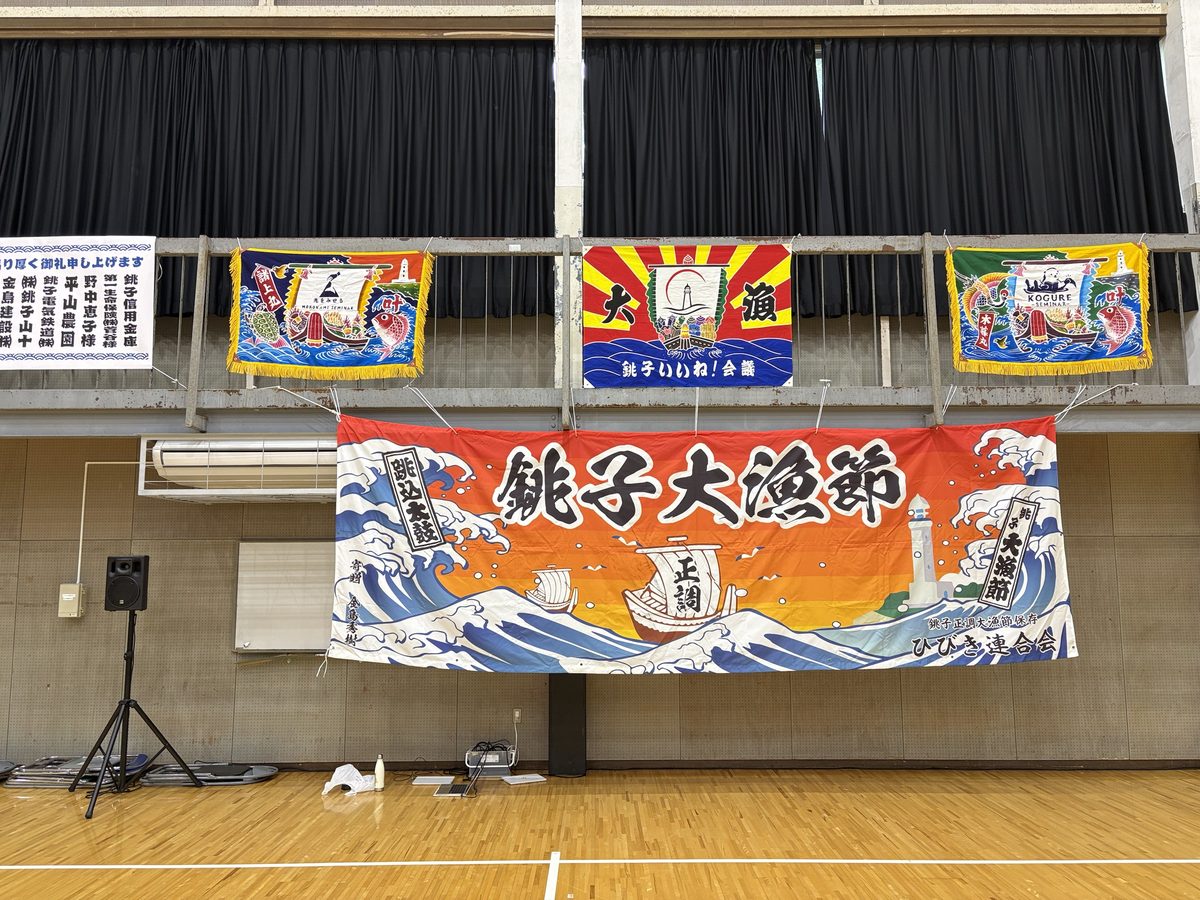
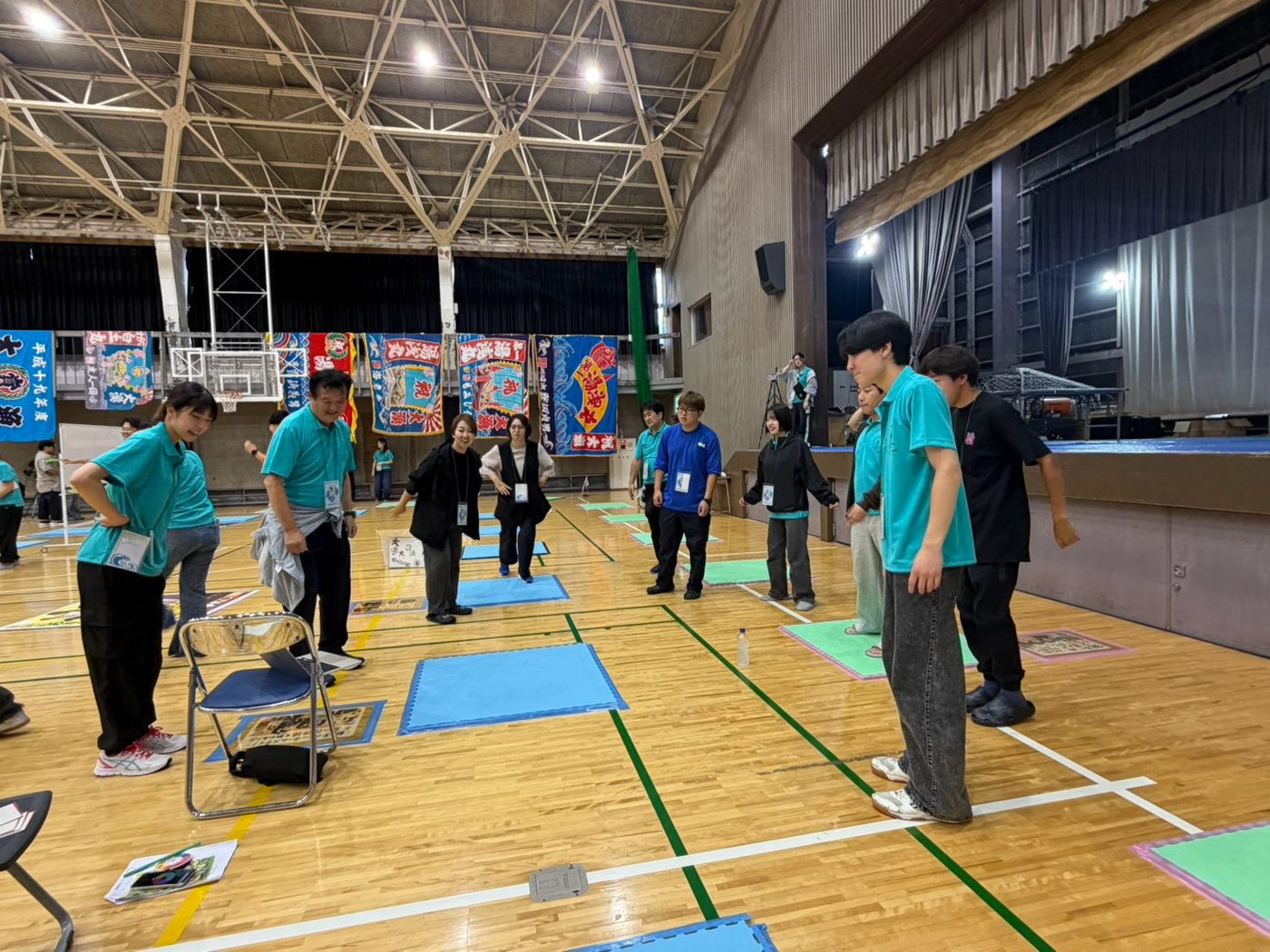
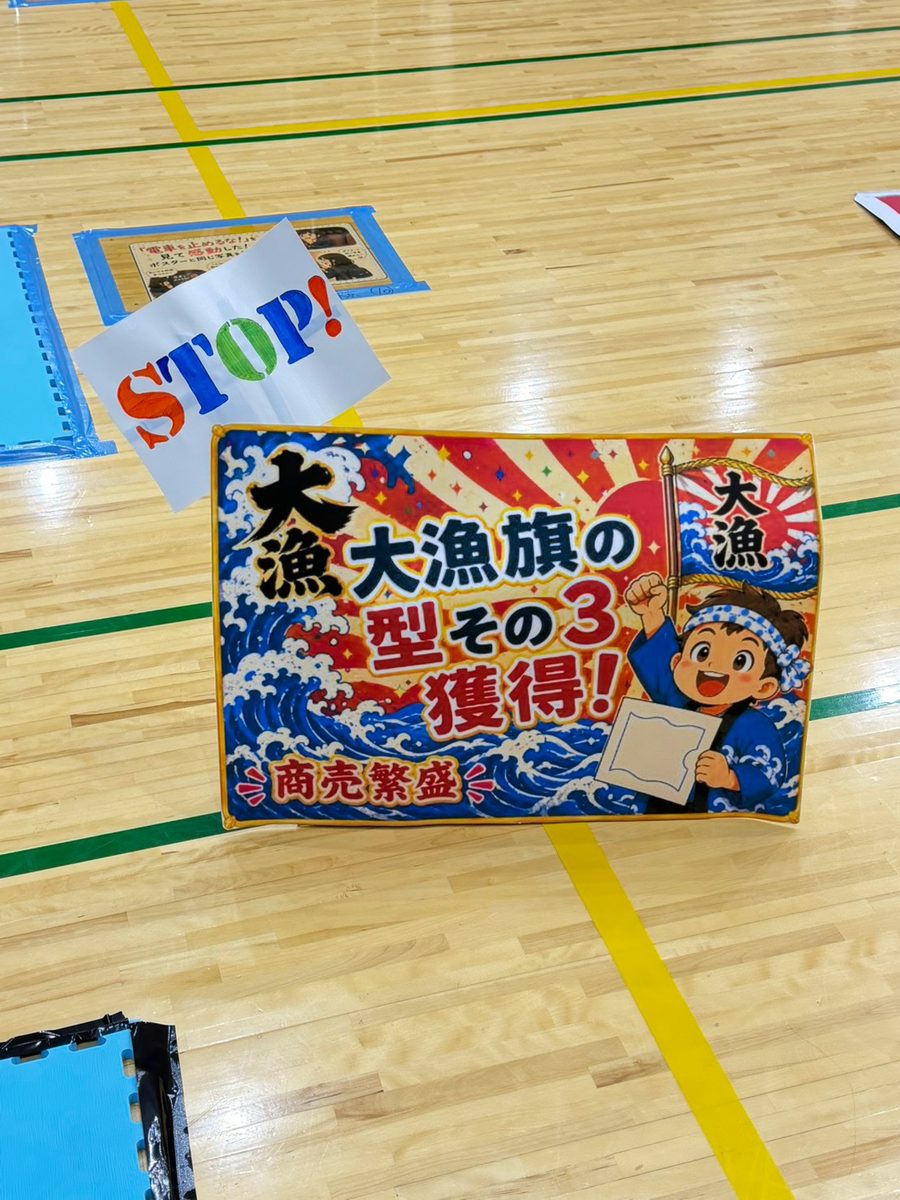
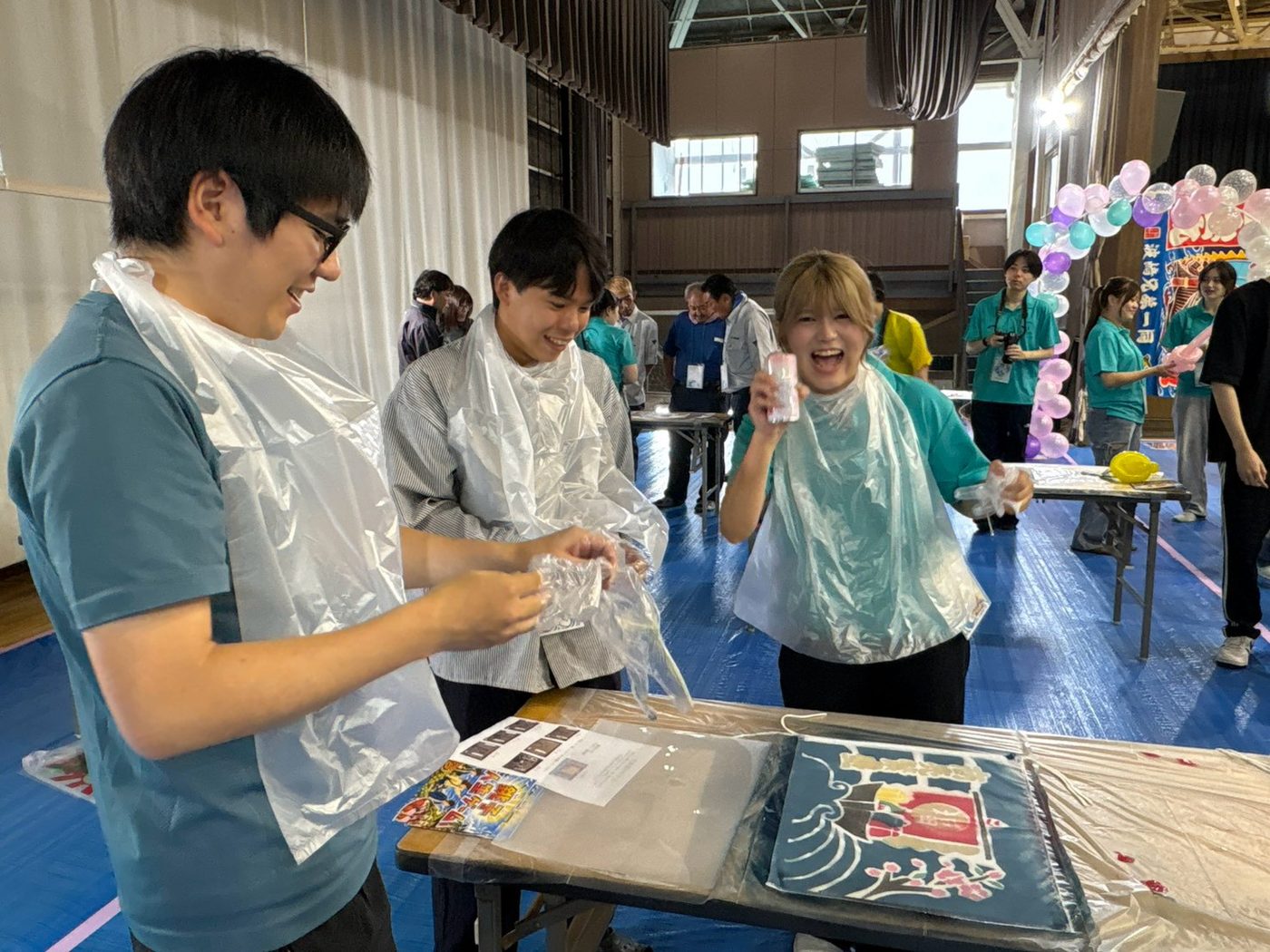
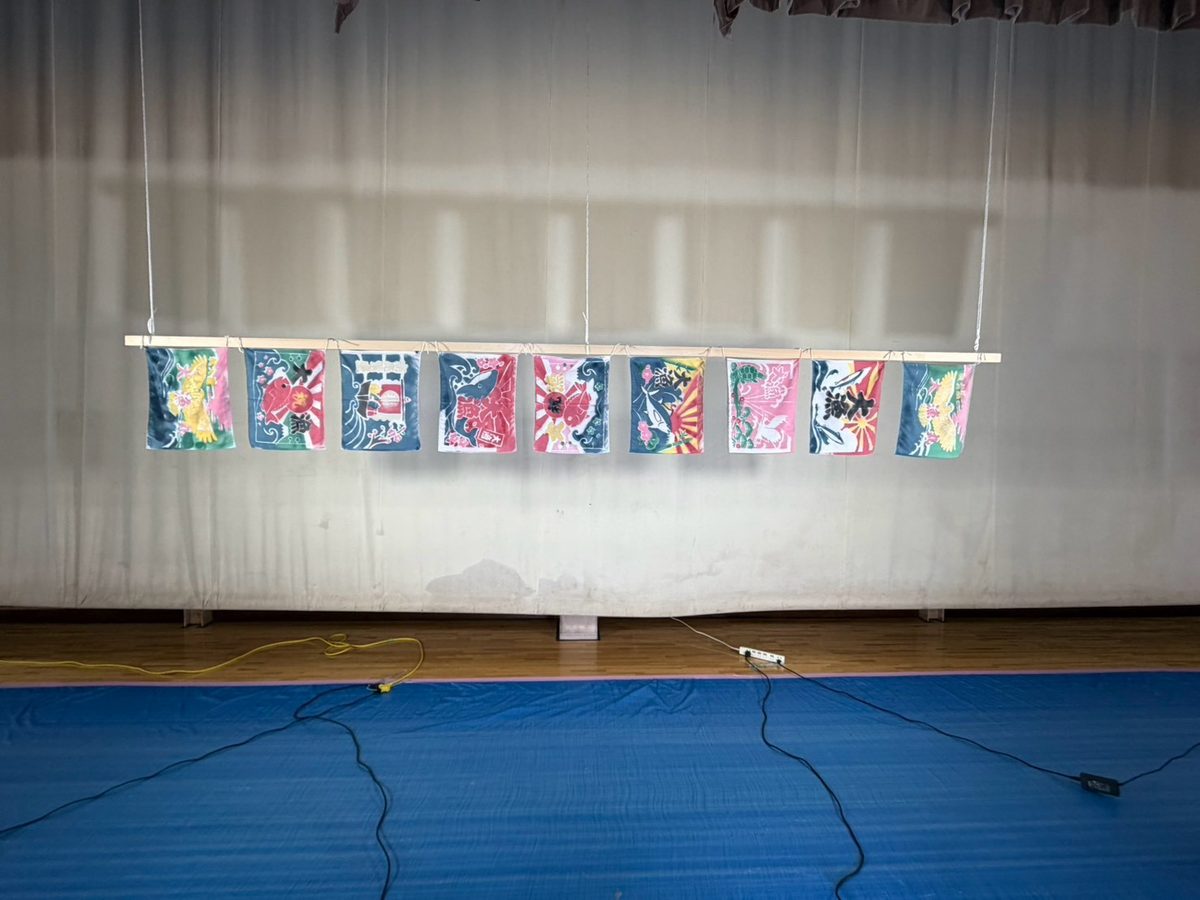
A life-size board game filling the gymnasium, with two routes — "born in Choshi" and "born in Tokyo" — inviting participants to look at the town's appeal from both inside and outside. Teams of five or six local residents and several students moved across the board, collecting design elements square by square, then used stencils and fabric spray paint to create their own tairyo-ki. Nine finished flags hung in the gymnasium by the end.
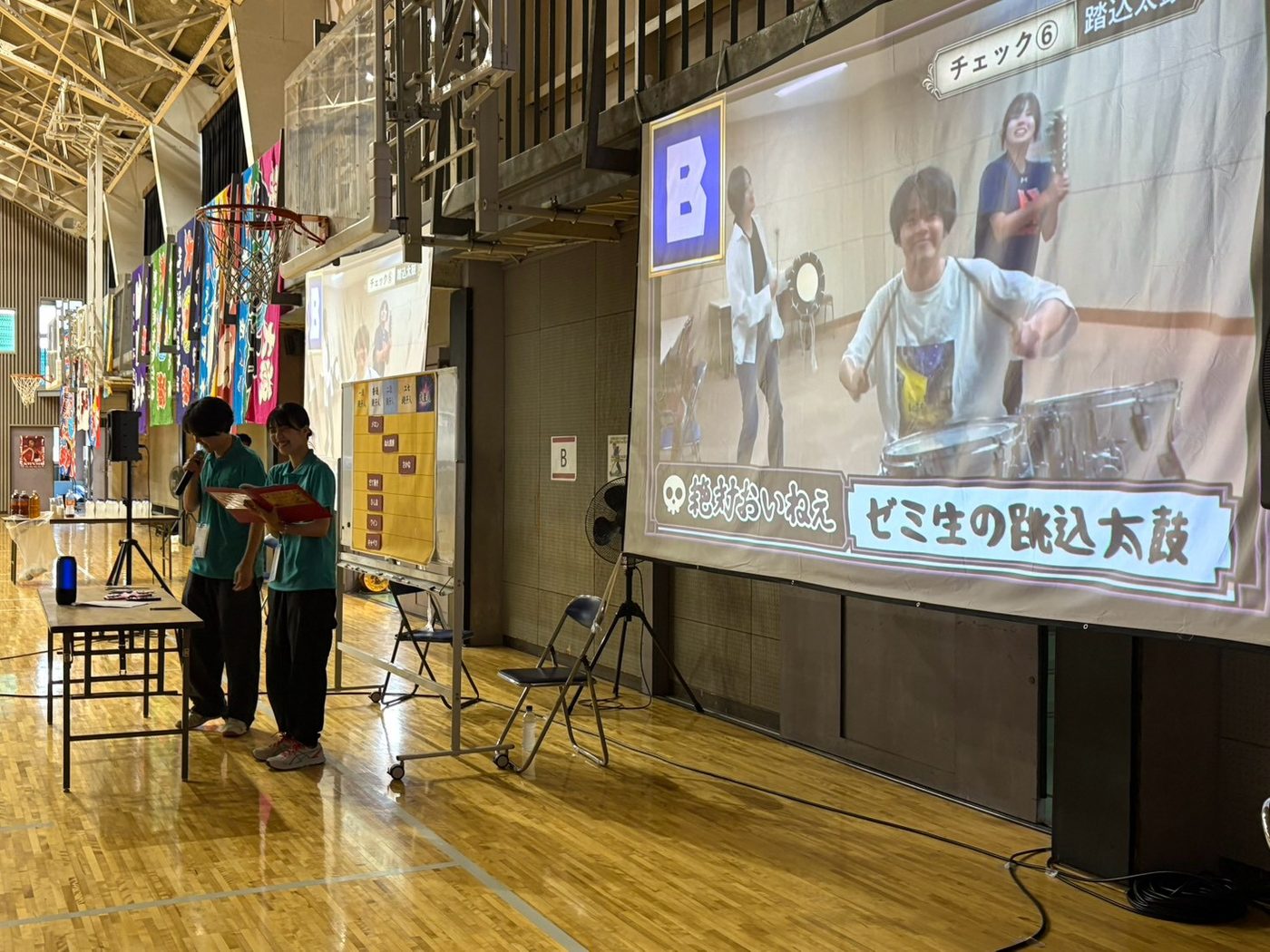
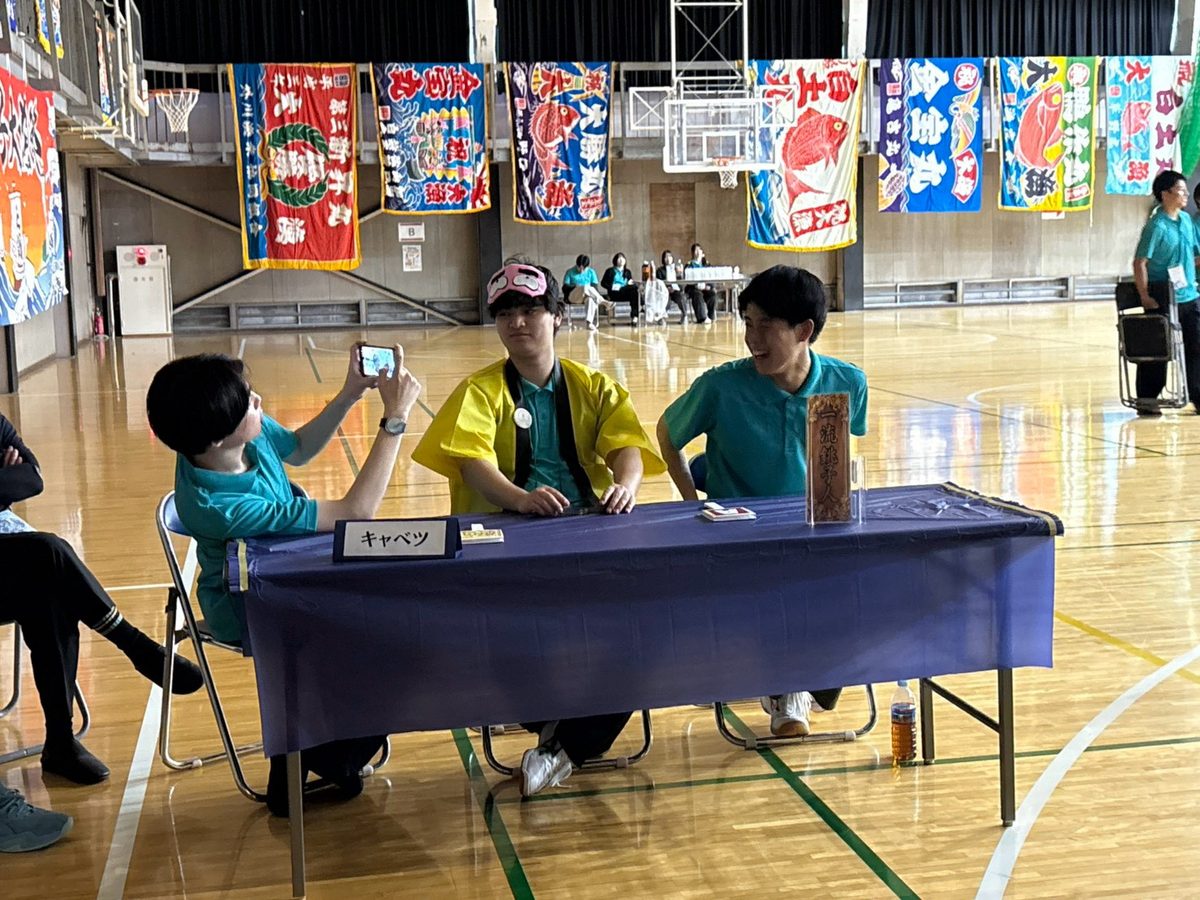
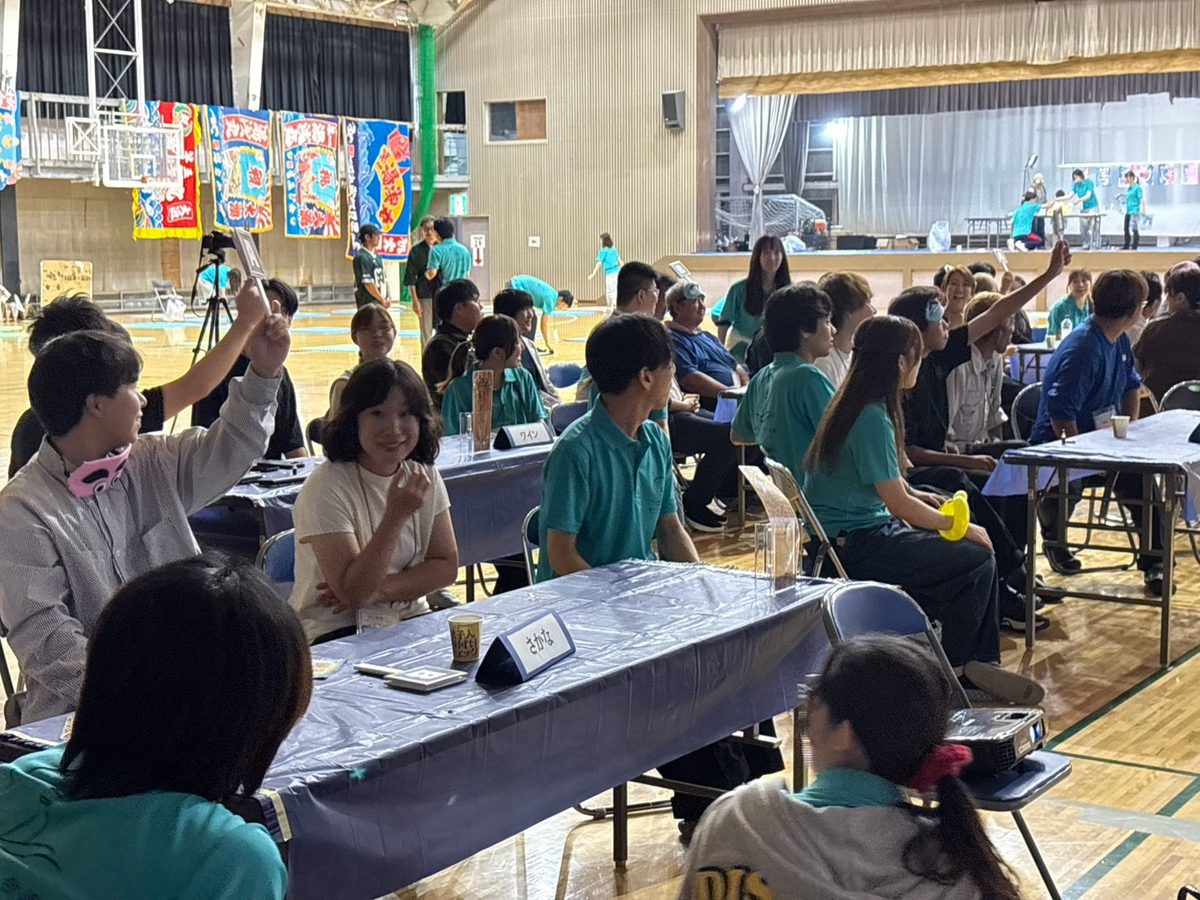
A quiz programme in homage to a Japanese television show, with seven questions on Yamasa Soy Sauce, the Nanohana exercise routine, Inubosaki Lighthouse, the Choshi Electric Railway, the sunrise, Hanekomi-daiko drumming, and raicho snacks. Mixed teams of about eight — local residents and students together — competed, and the hall erupted at right and wrong answers alike.
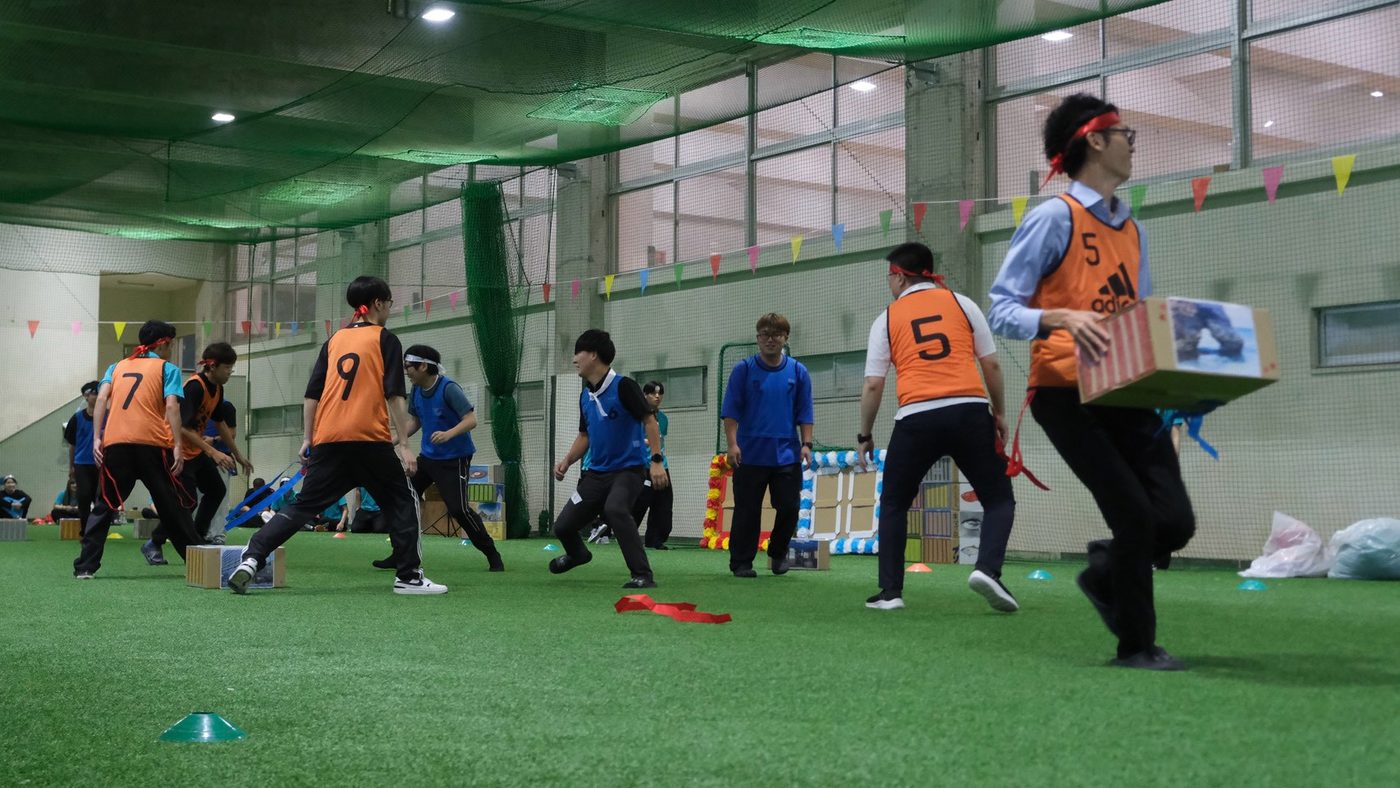
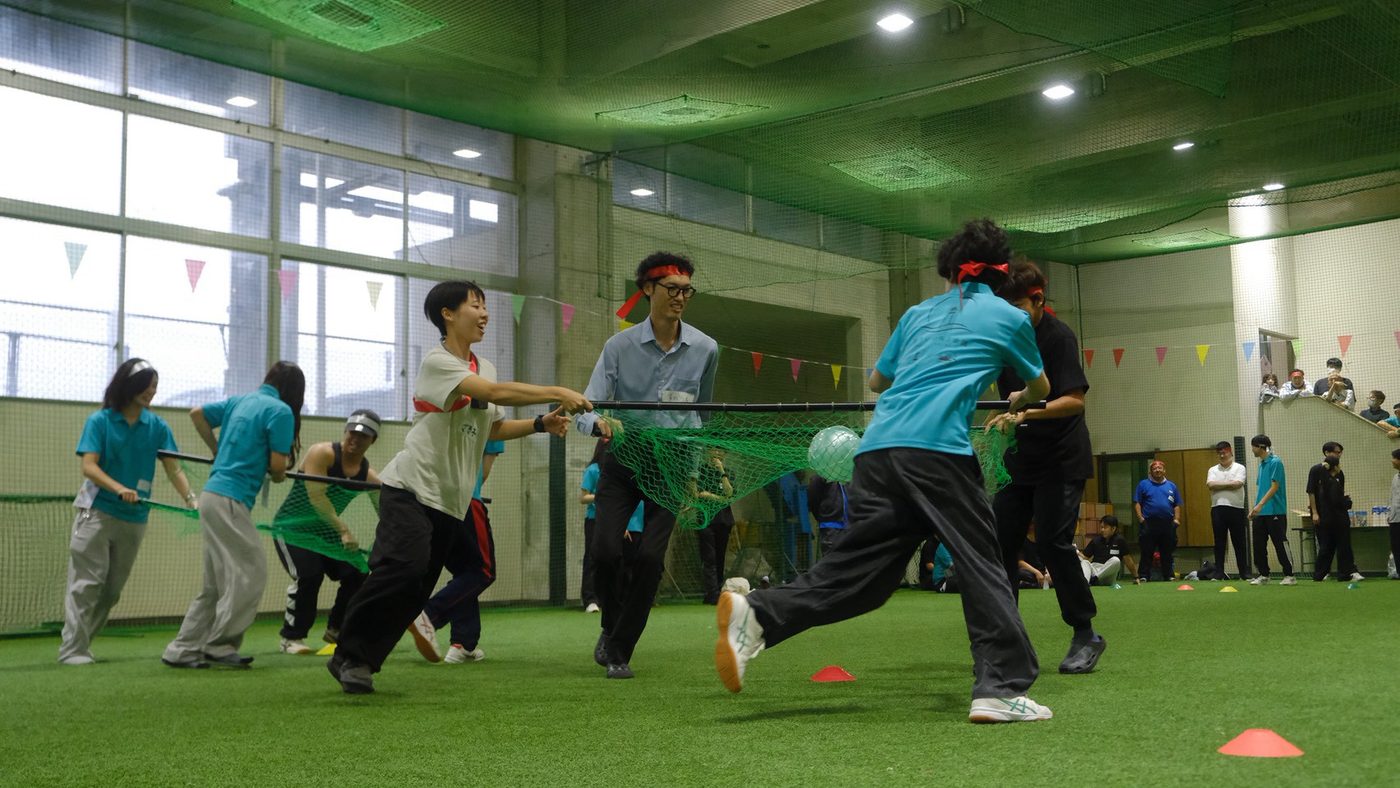
Organised by Kogure Seminar. Rain made the outdoor grounds unusable, so the whole programme moved at short notice to the indoor training field. Choshi Challenge (an obstacle race), Hama-tairyo (carrying a giant ball), Choshi Treasure Hunt (tag with tails) and the beanbag toss — familiar, nostalgic events that residents and students took on side by side.
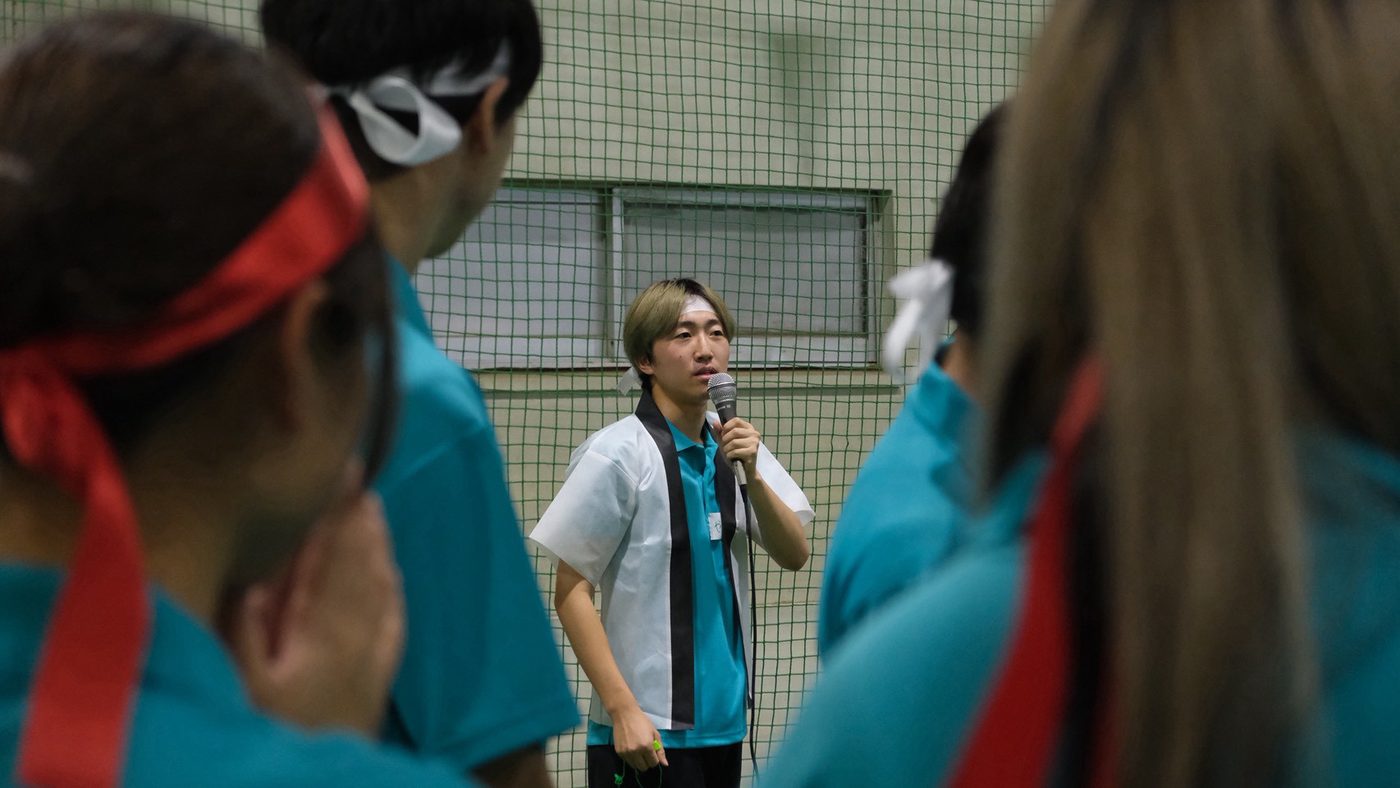
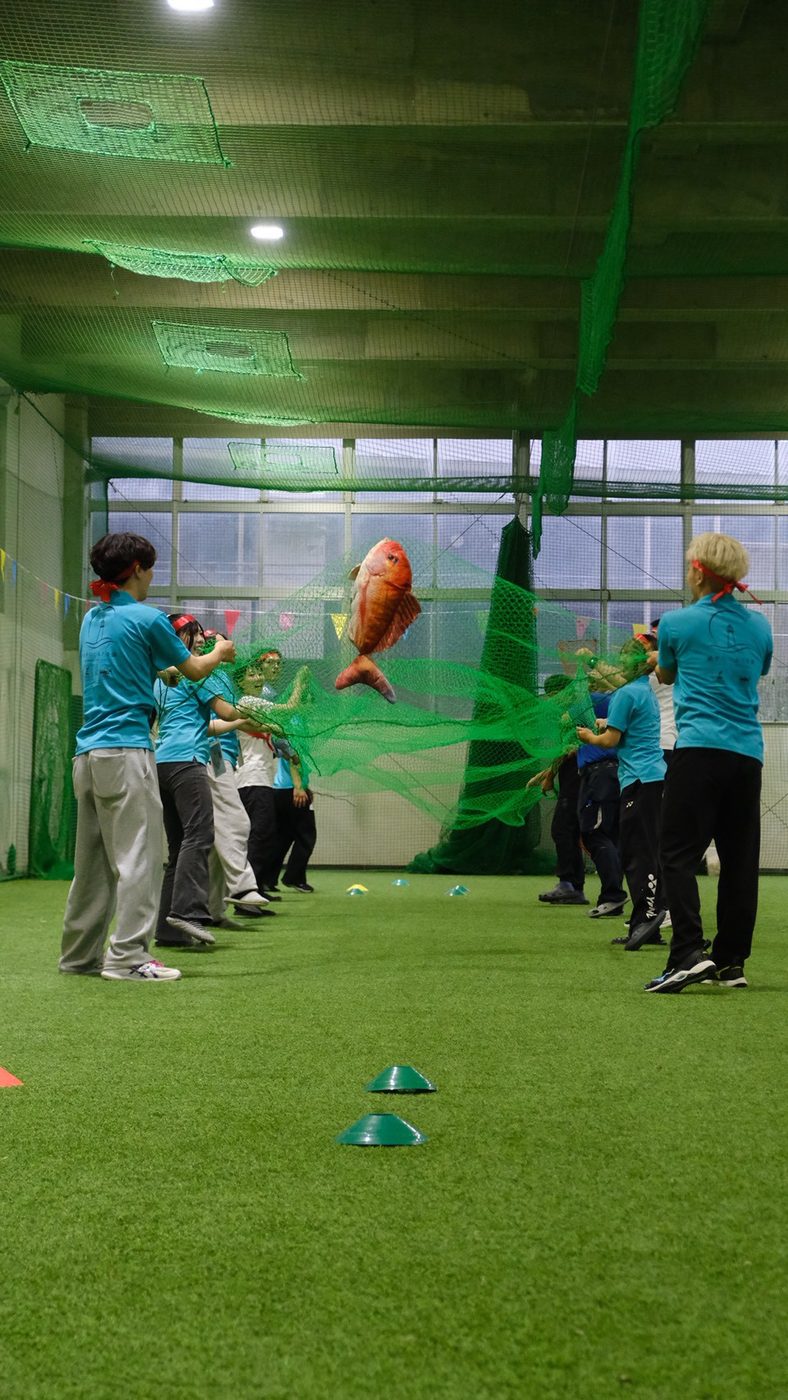
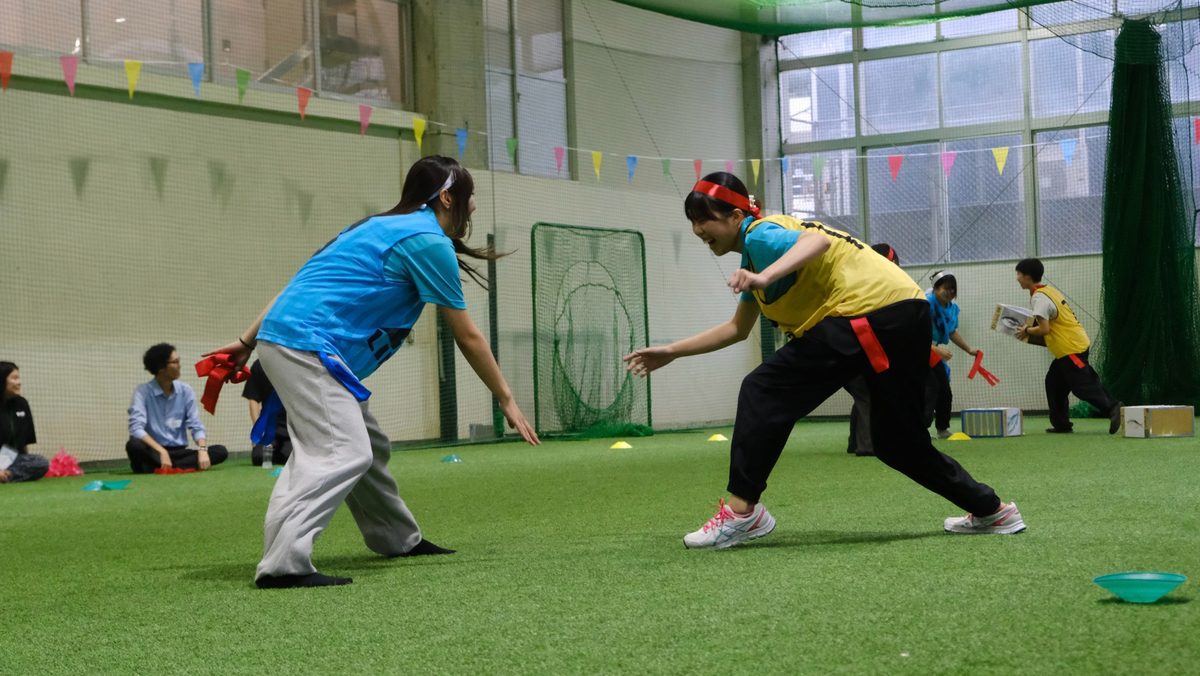
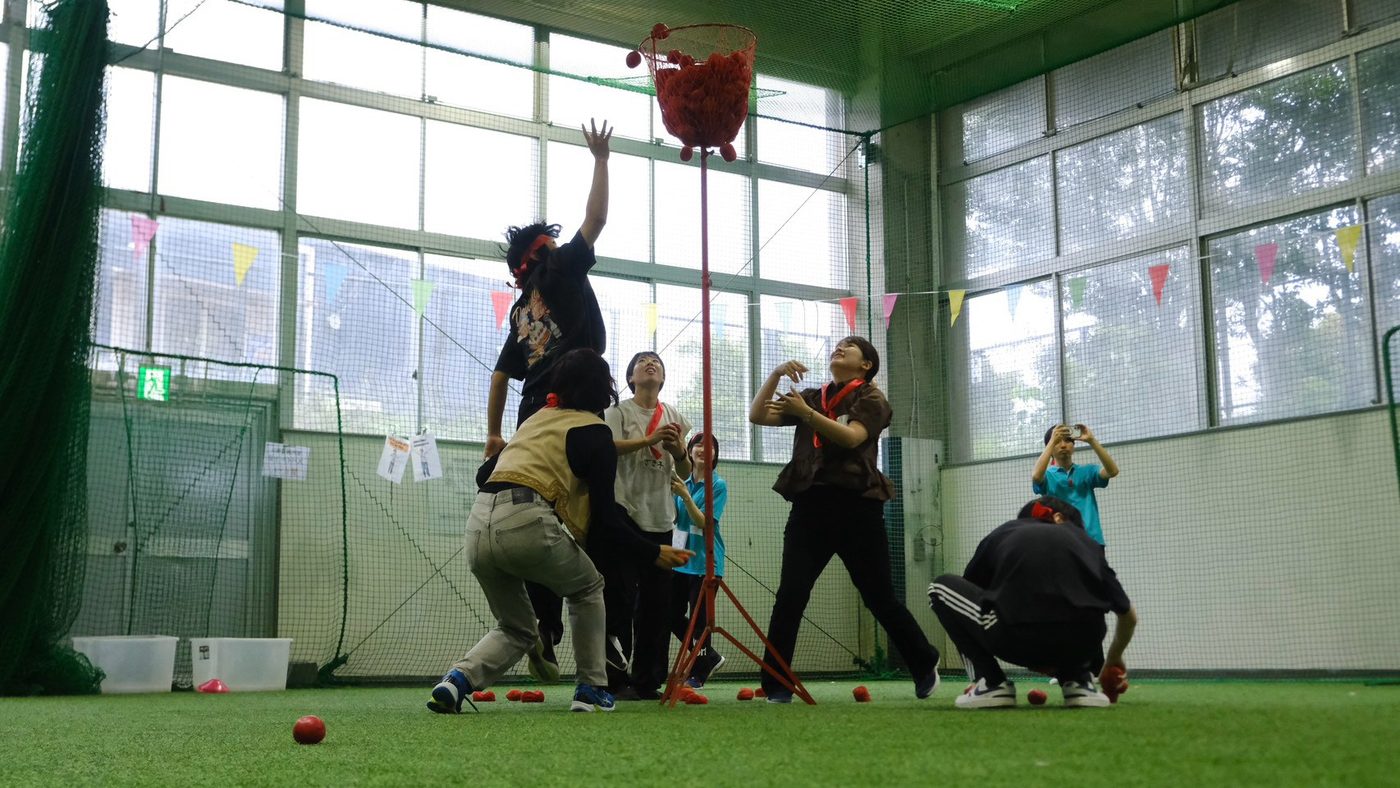
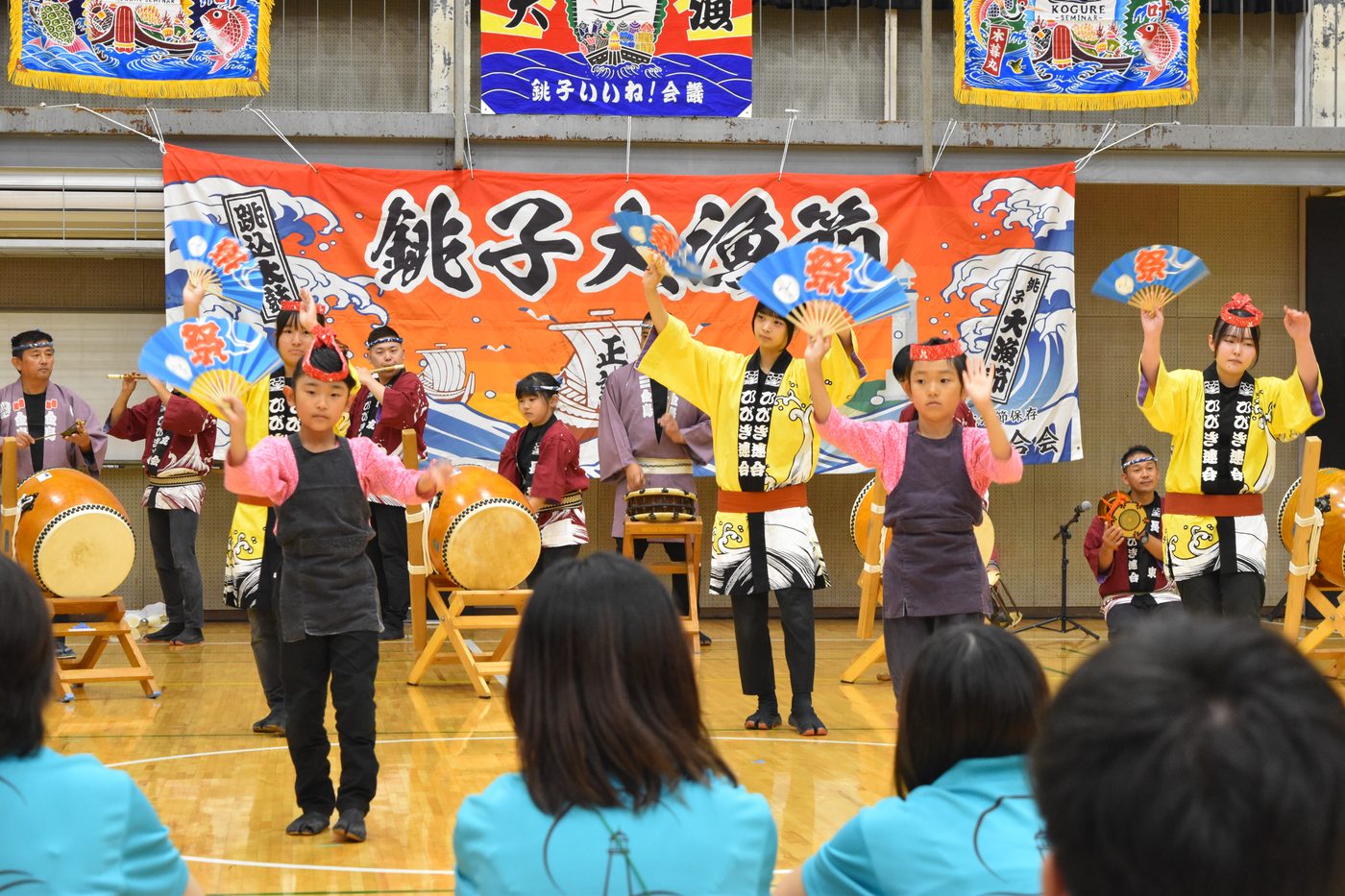
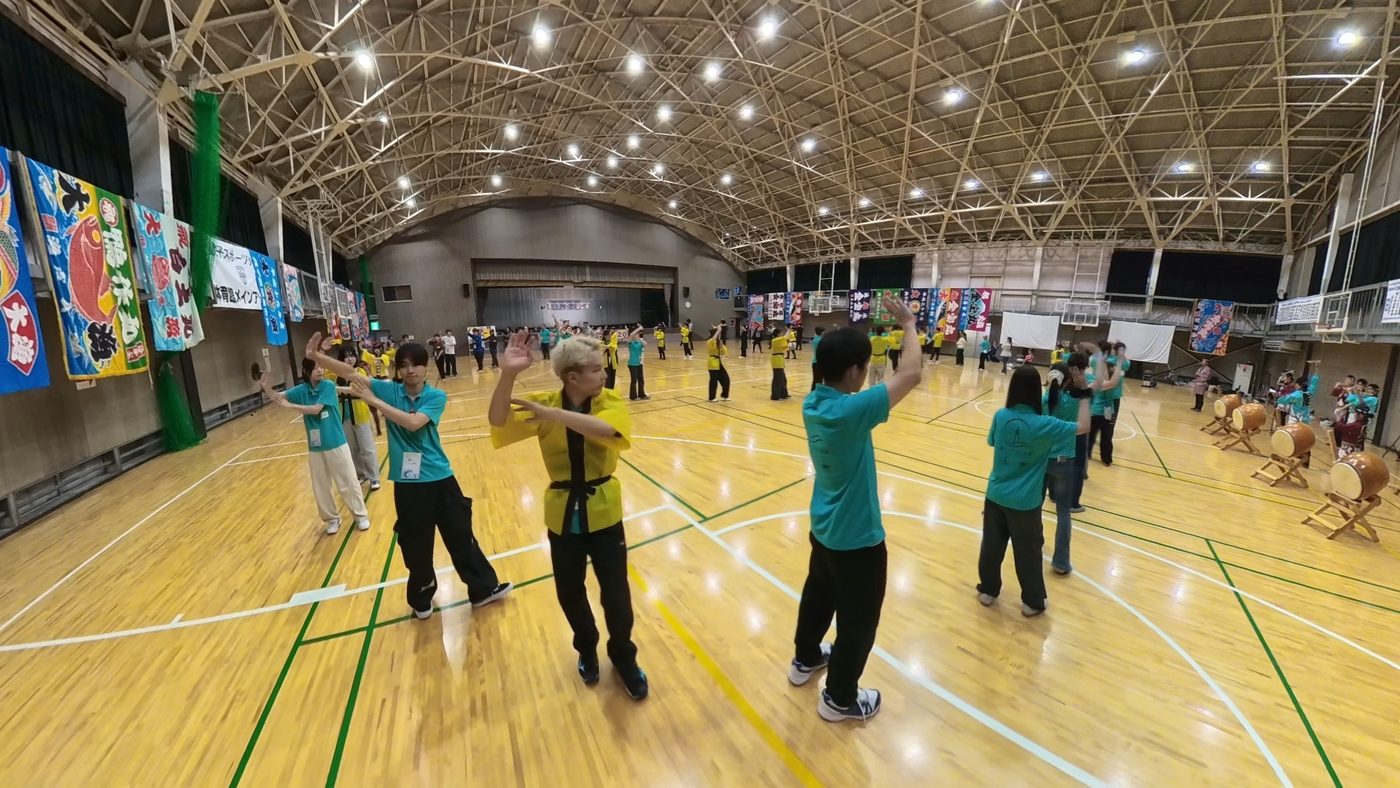
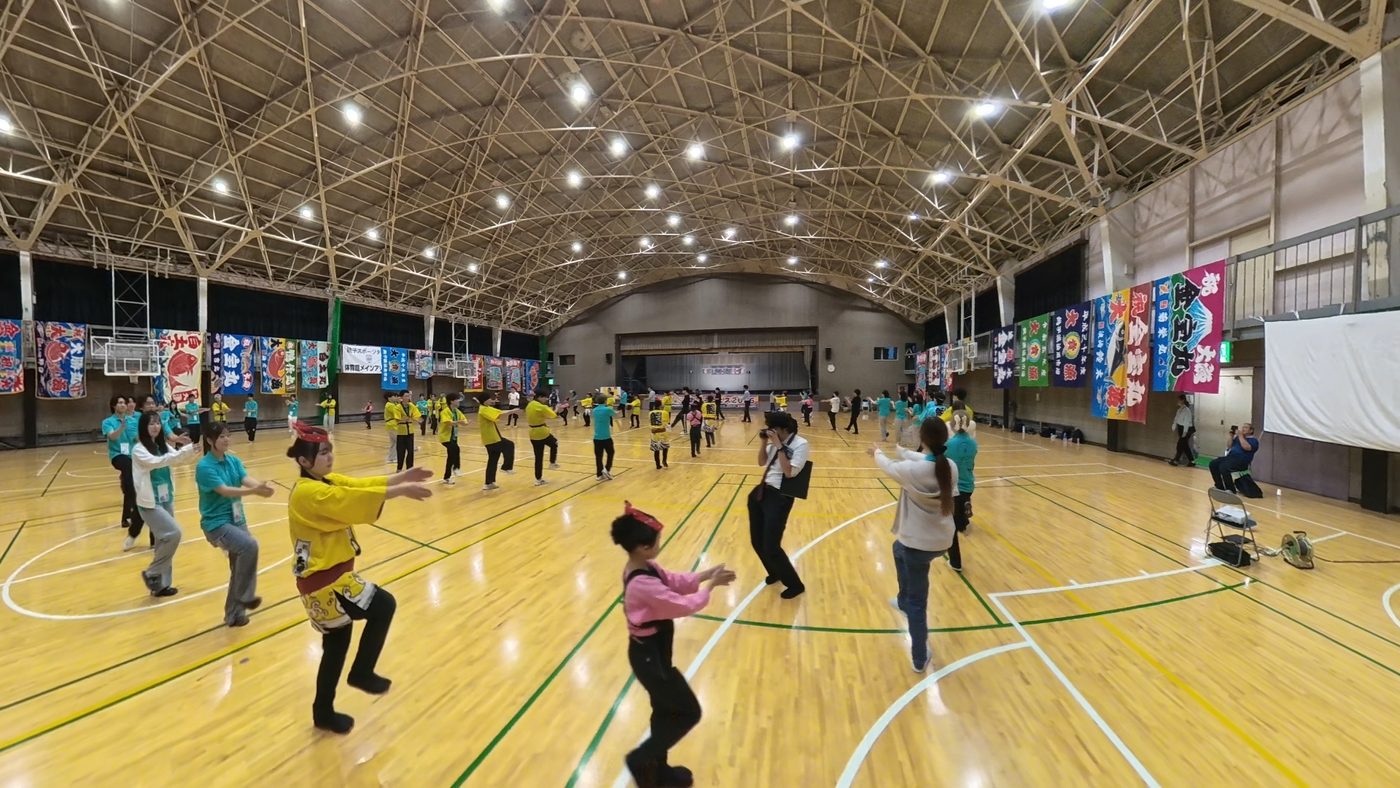
The highlight of the day, made possible by the Hibiki Federation for the Preservation of the Choshi Seicho Tairyo-bushi. Twenty-four members — spanning four generations, from age 3 to 85 — first performed the dance as it is properly done. Participants then split into three groups for about twenty minutes of instruction, before everyone formed a double circle and danced together for some ten minutes. "Open your arms wider — the movement reads better that way." The federation's warm, hands-on coaching was much appreciated.
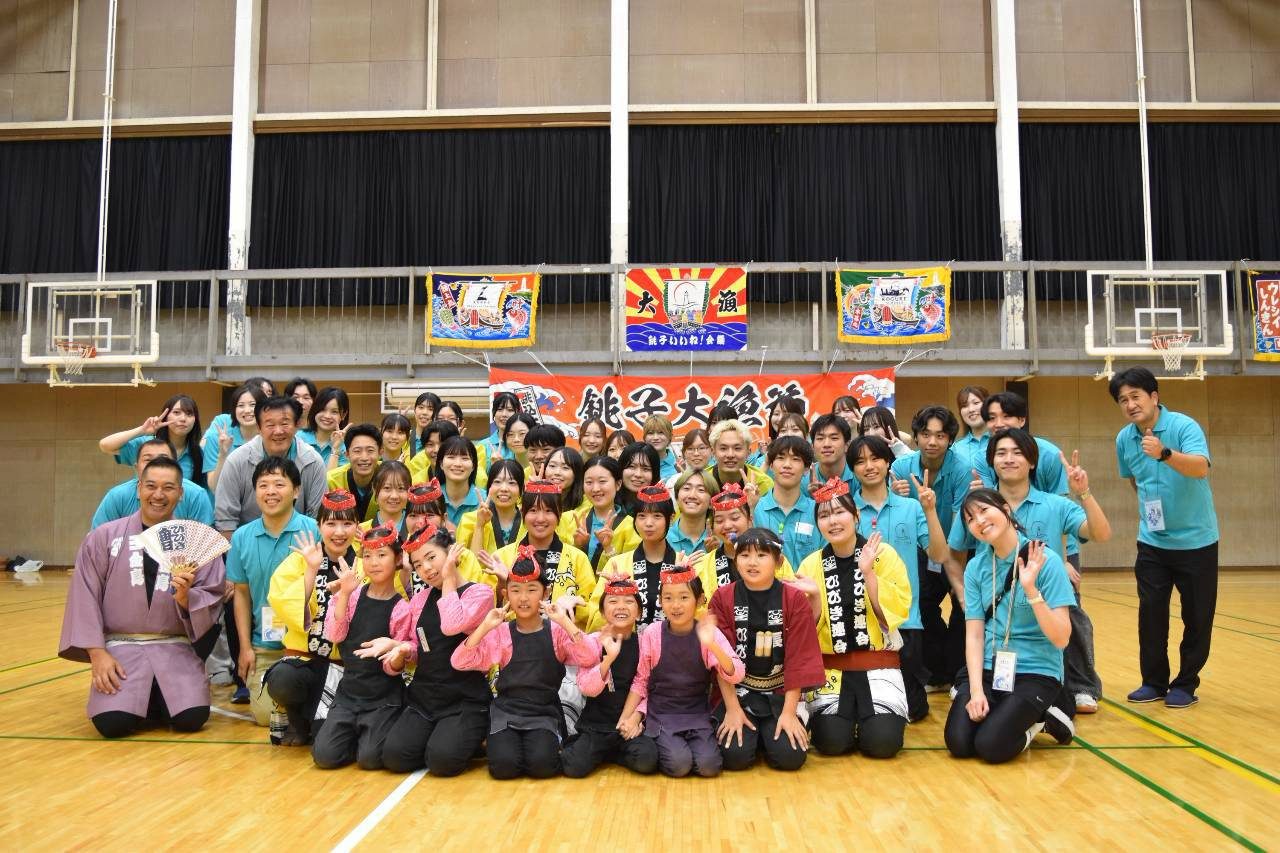
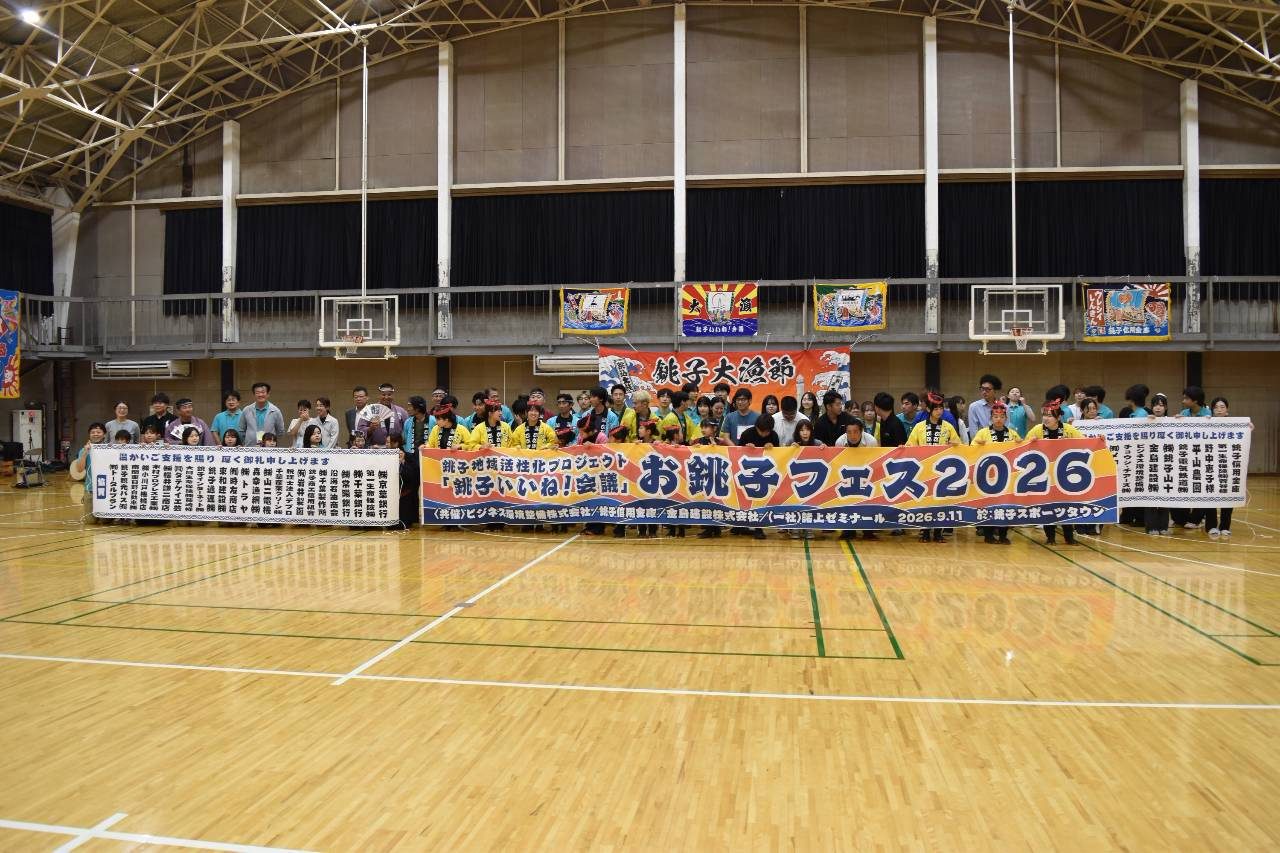
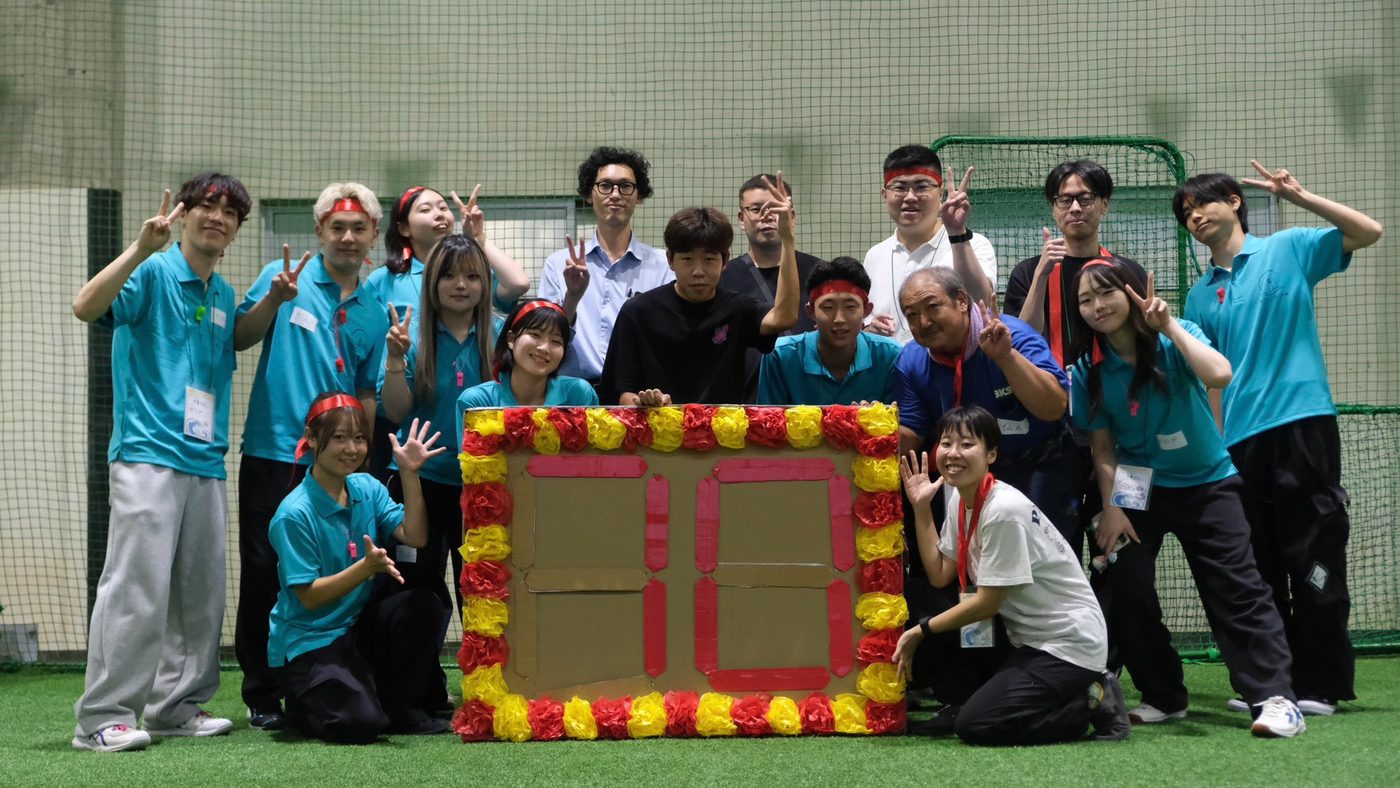
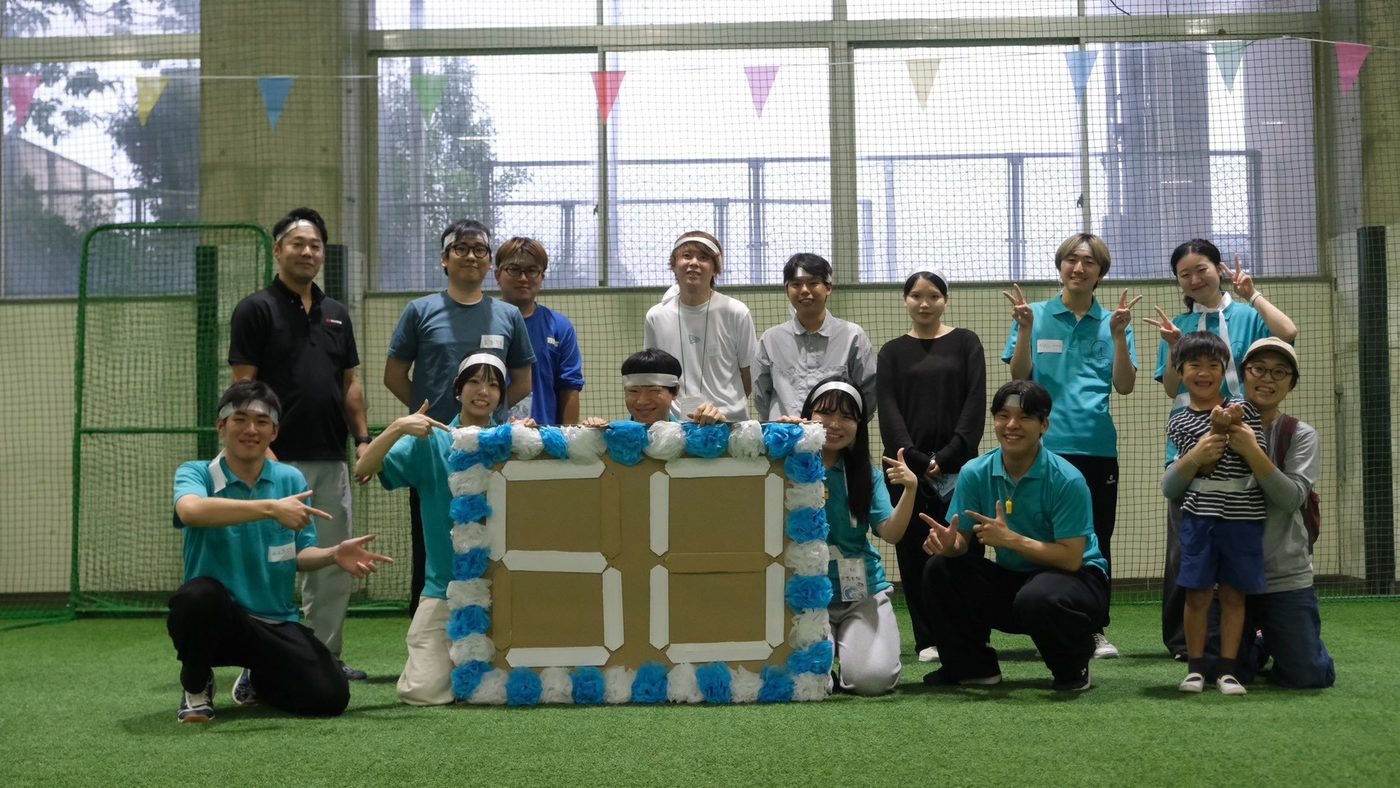
After closing remarks from Chairman Kaneshima, everyone gathered for a group photograph. A barbecue followed — cooked outdoors, eaten in the multipurpose room — where the donated ingredients were served and local children joined the table. Monday Coffee set up outdoors through the day, providing a welcome pause between programs. The rain had stopped by nightfall, but the stars never appeared, so everyone enjoyed hand-held fireworks instead. The local children may well have enjoyed them most of all.
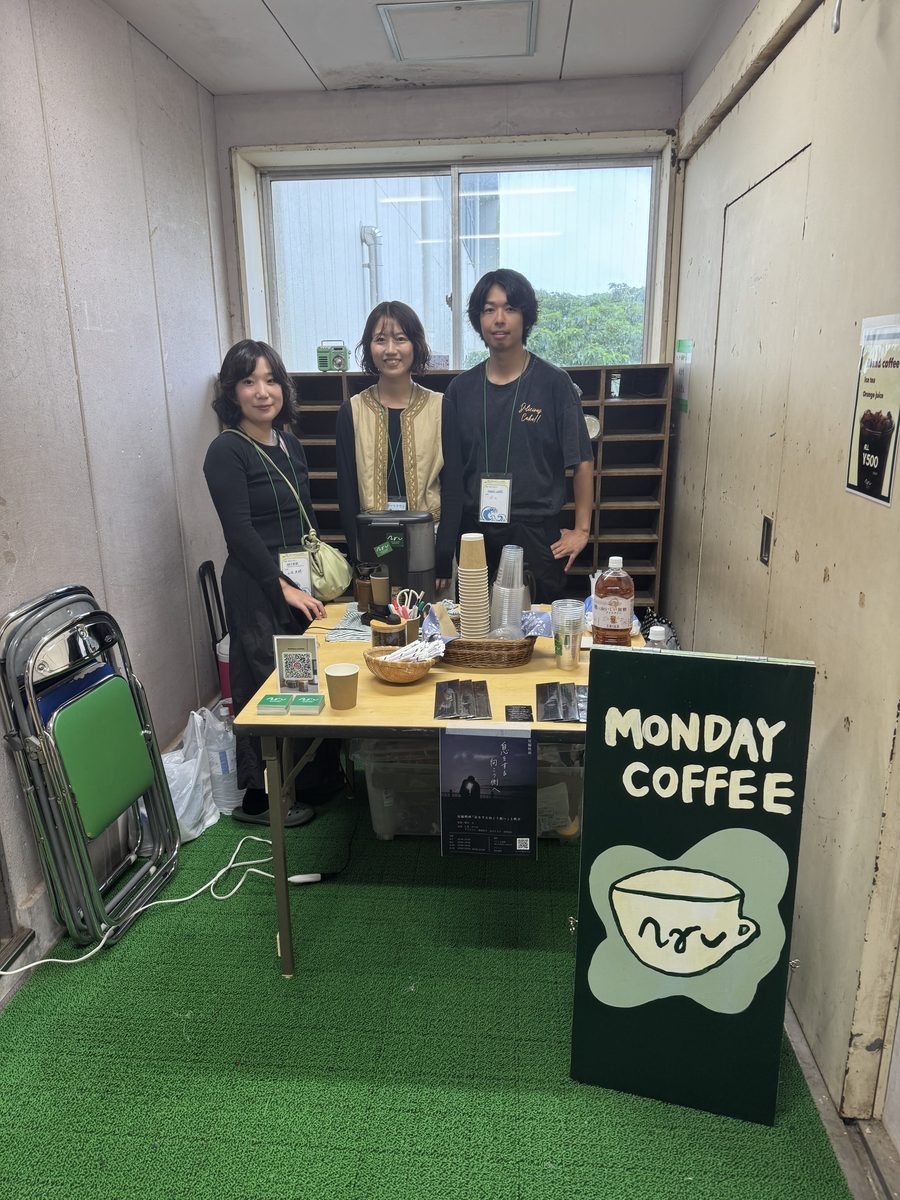
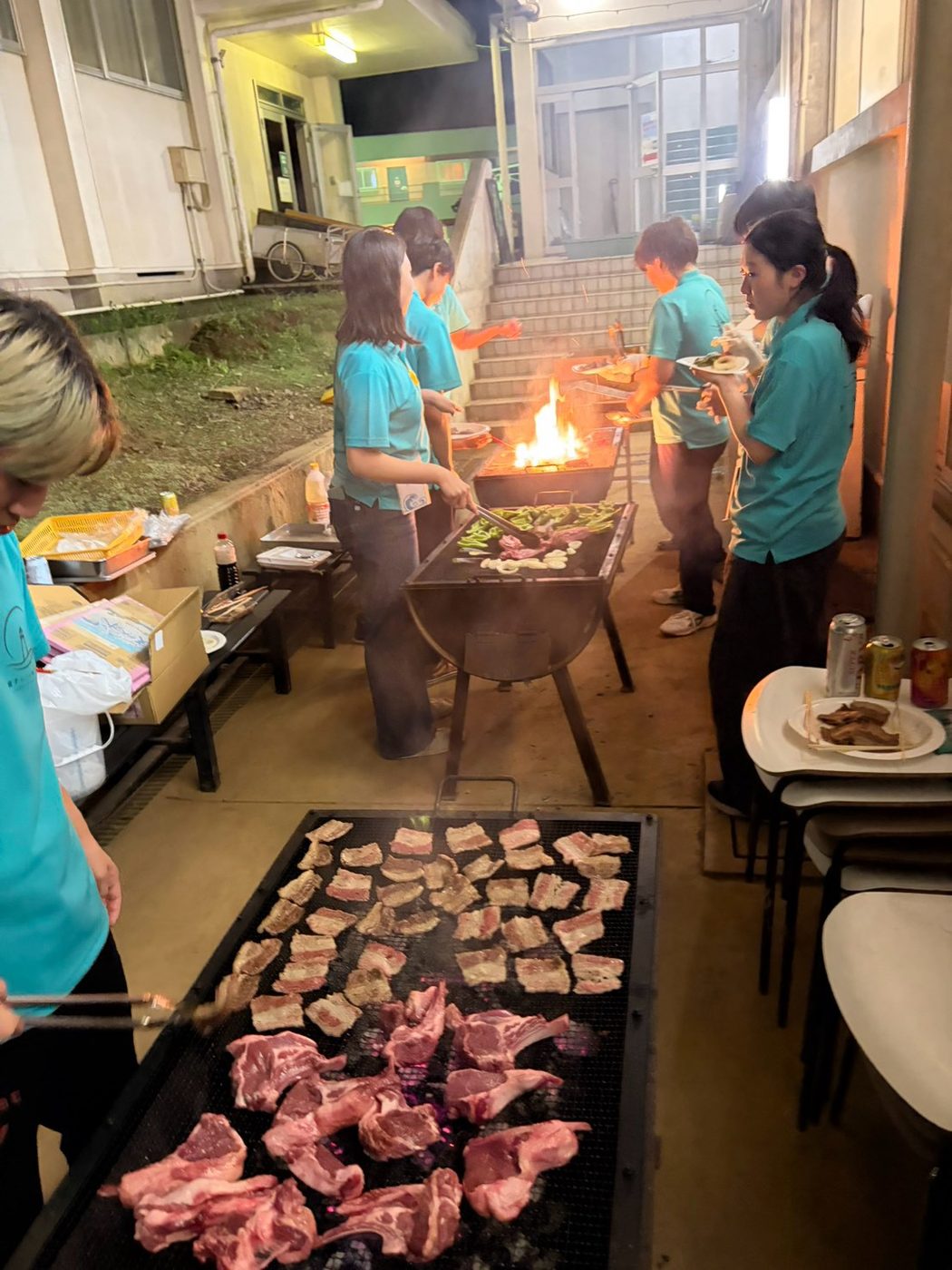
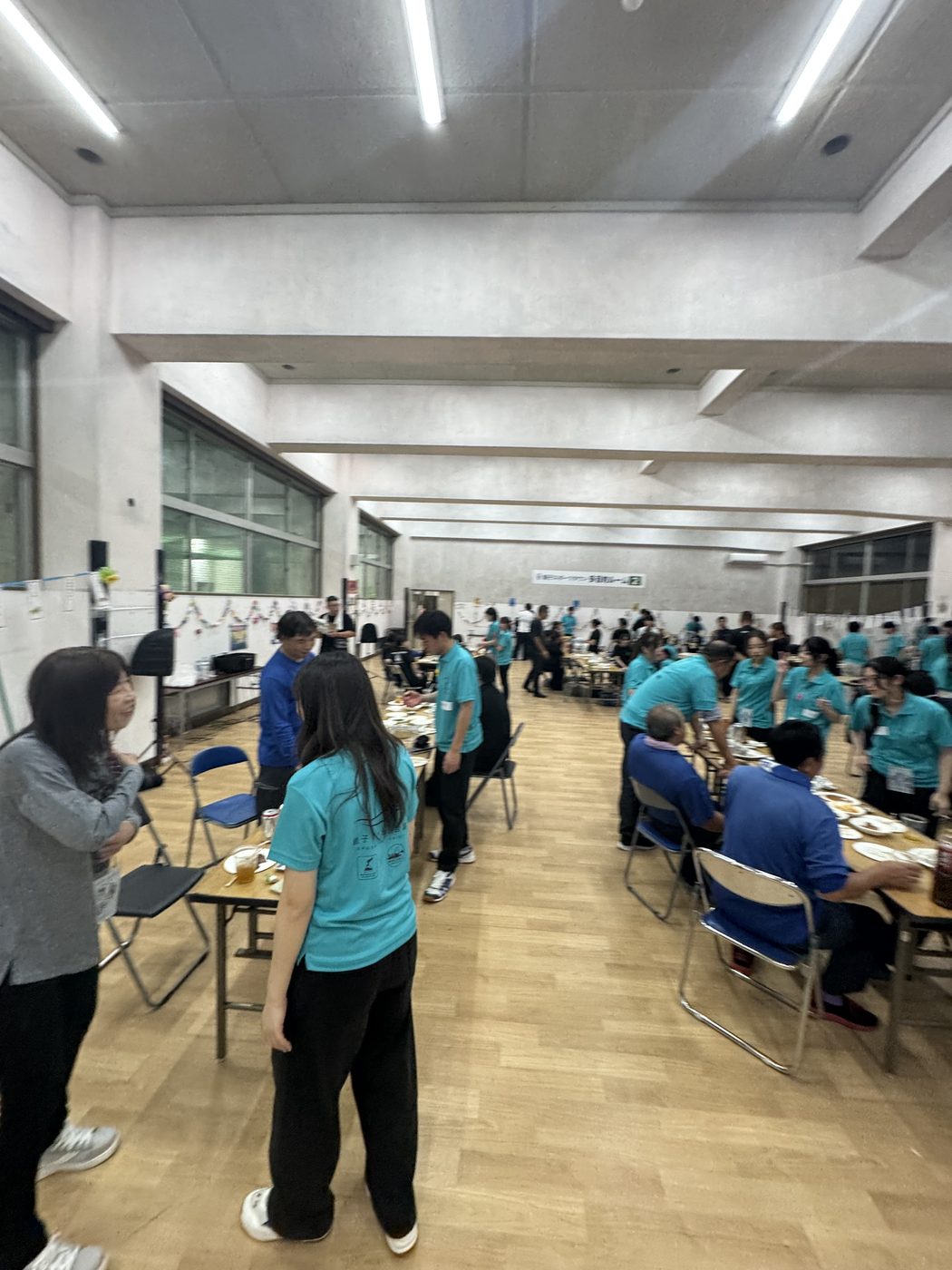
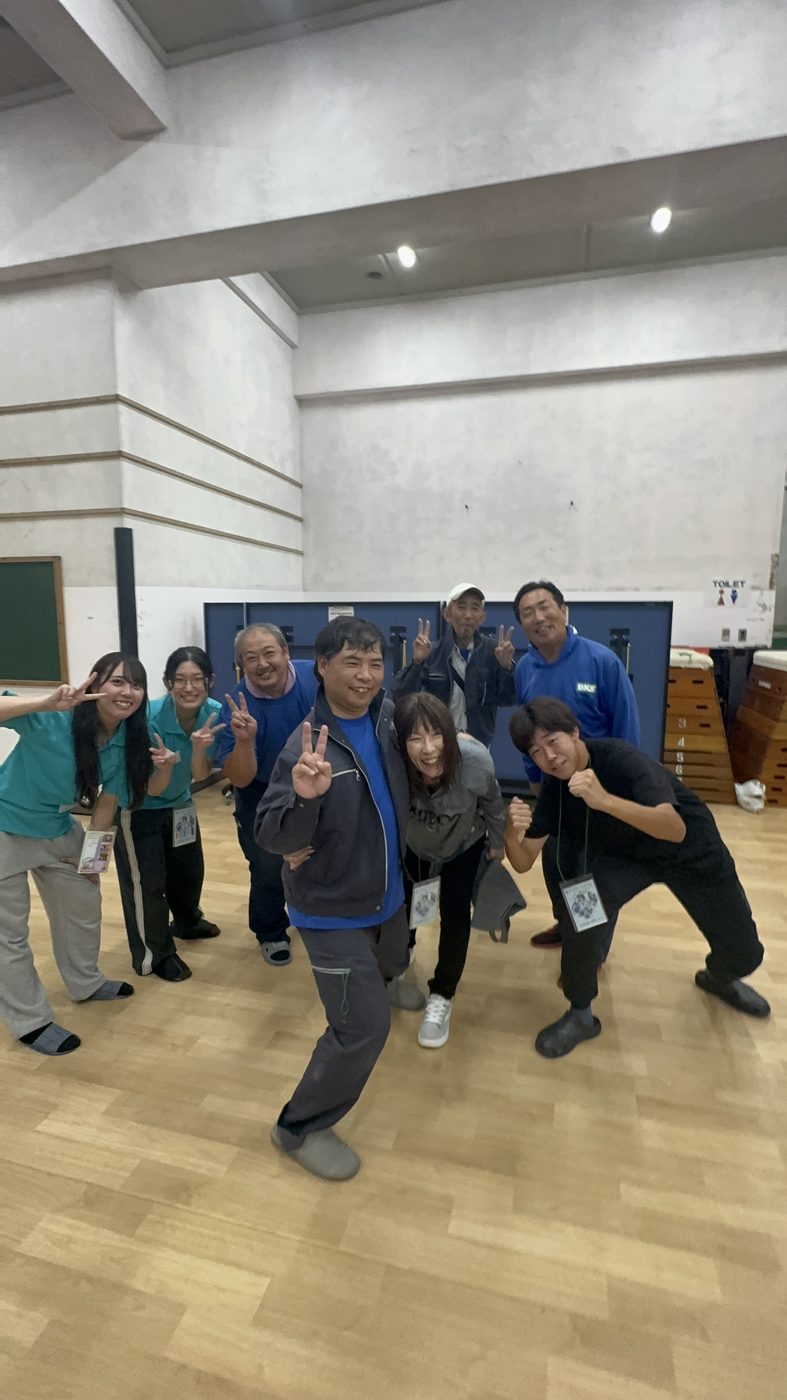
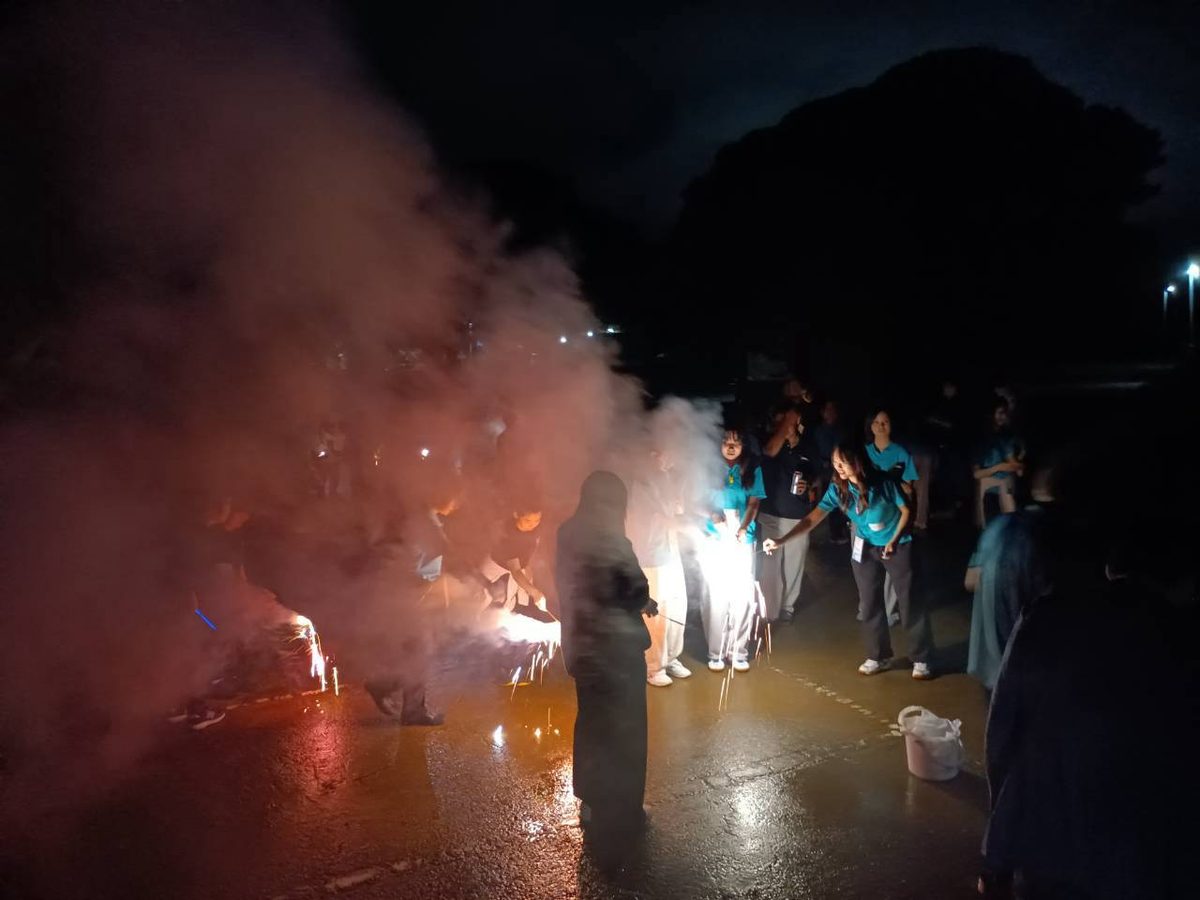
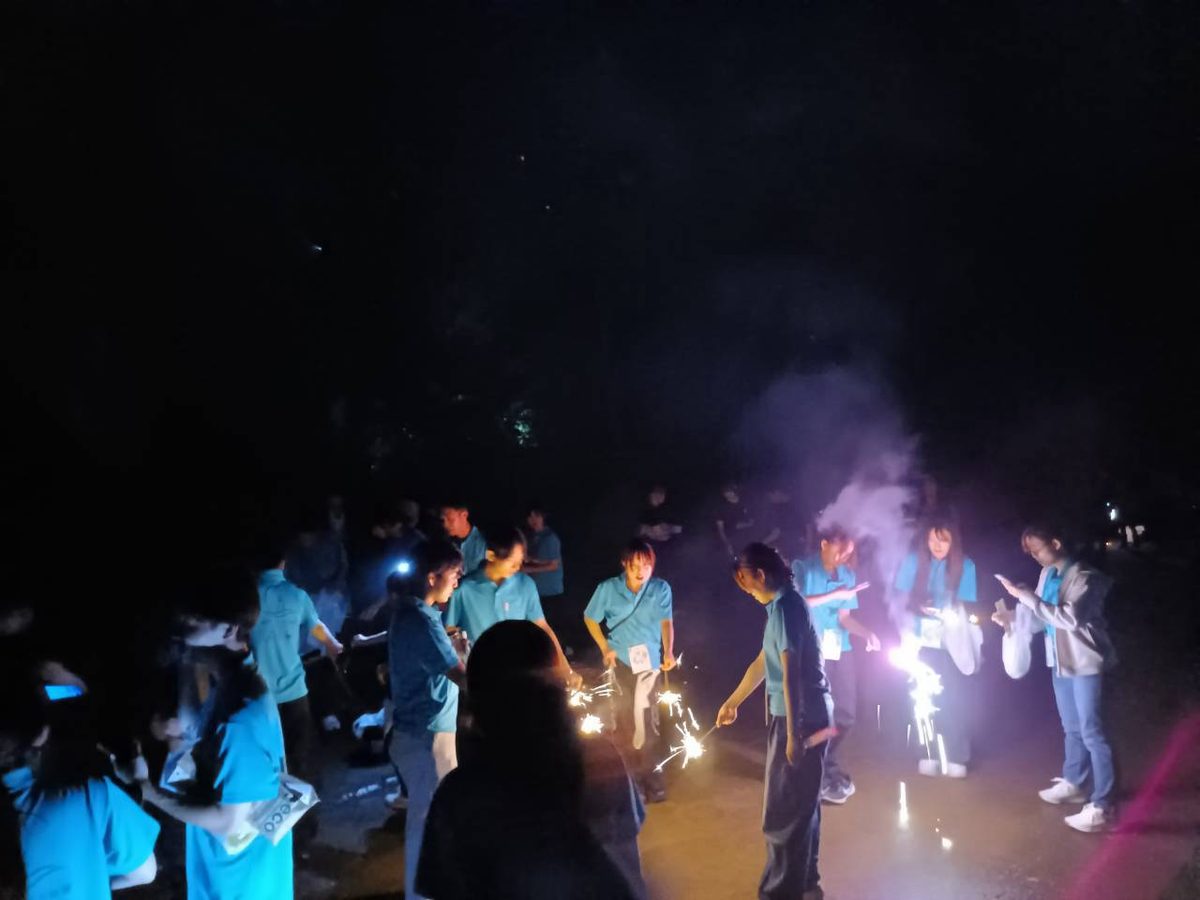
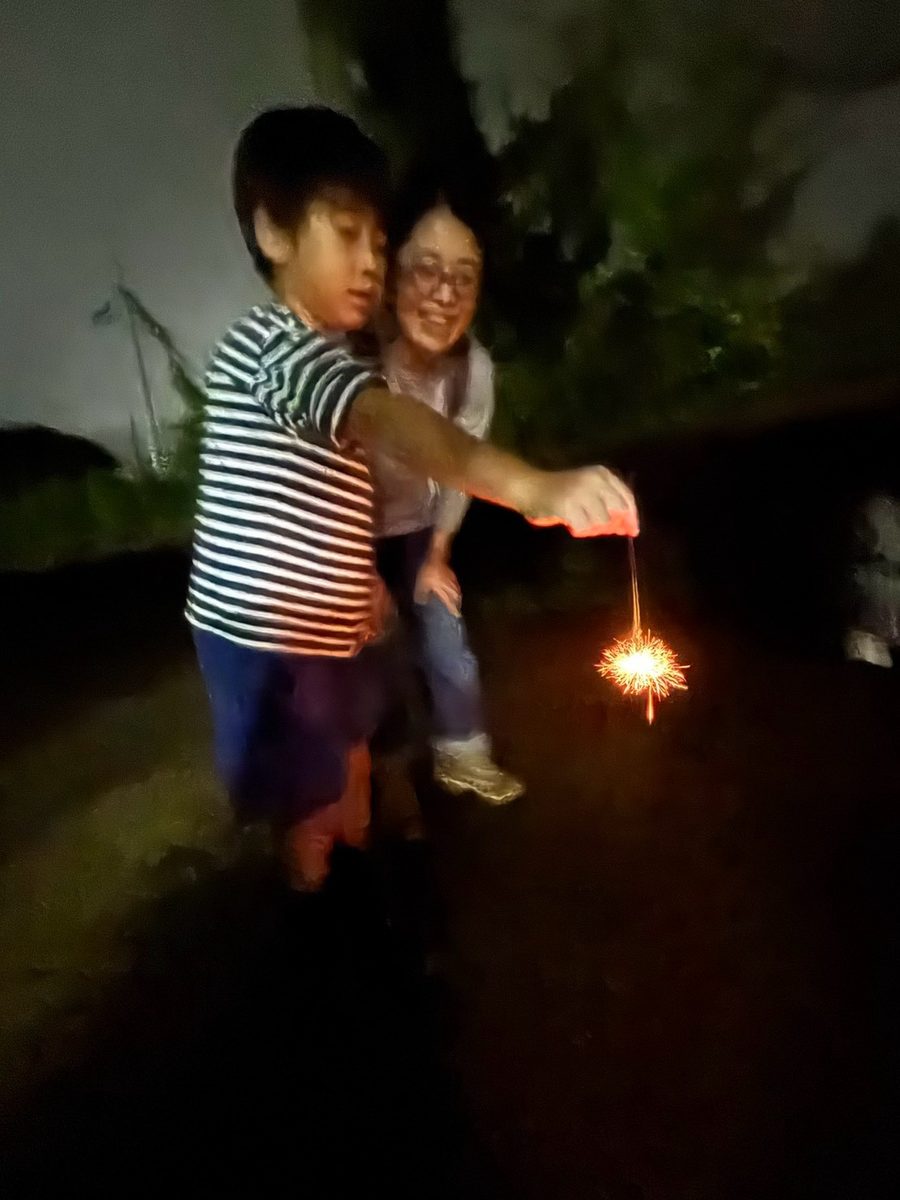
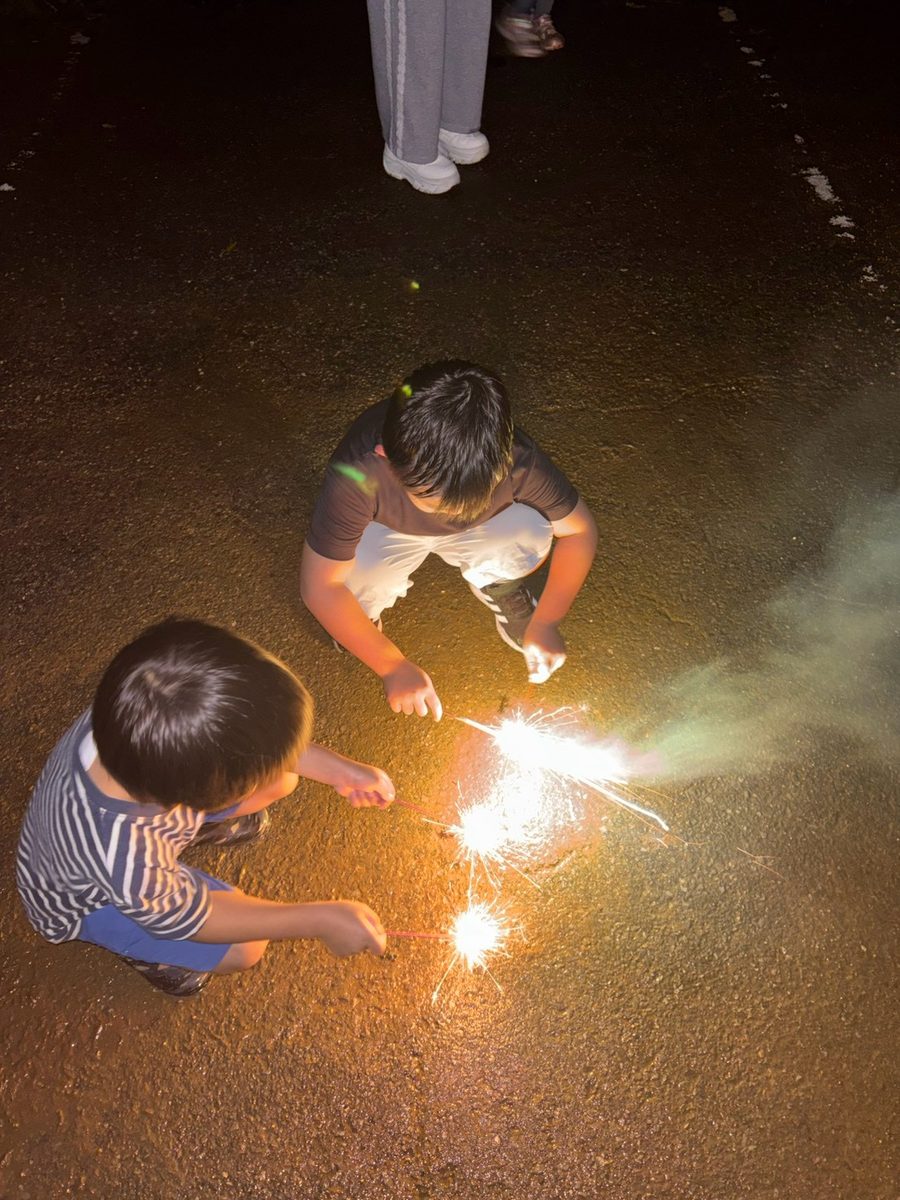
* This records what actually took place. Events scheduled for the outdoor grounds were moved to the indoor training field because of rain, and the all-school relay was cancelled.
The paper reported that some 100 people learned the dance, following the lead of the Hibiki Federation's members.
Ochoshi Fes 2026 was made possible by the generous support of many local companies and organisations. We are deeply grateful.
Names are given in Japanese, as registered.
Our thanks once again to everyone who supported this event. For collaboration or partnership inquiries, please contact acc.morokami@gmail.com.
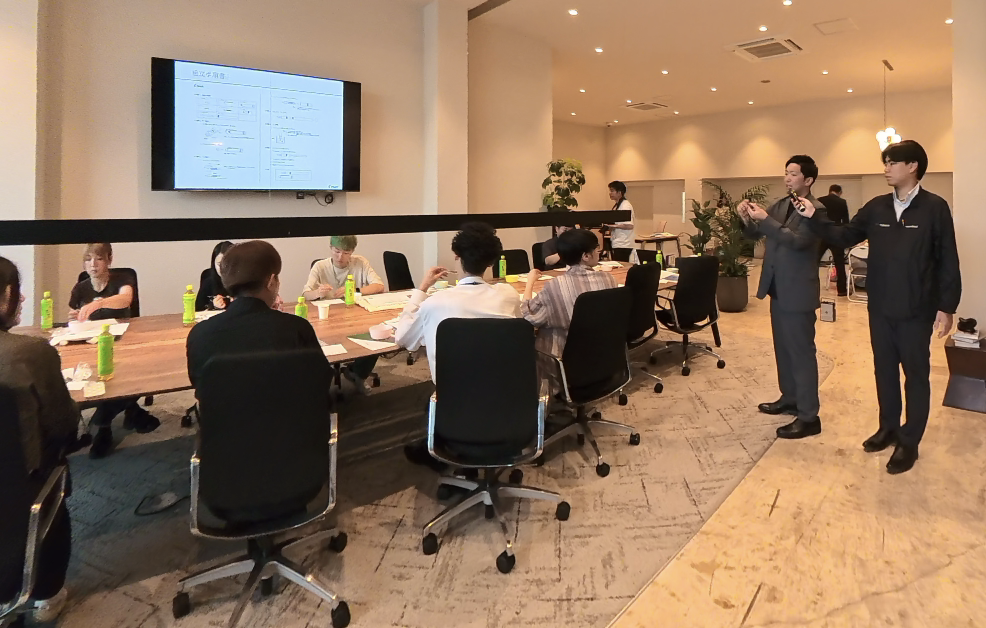
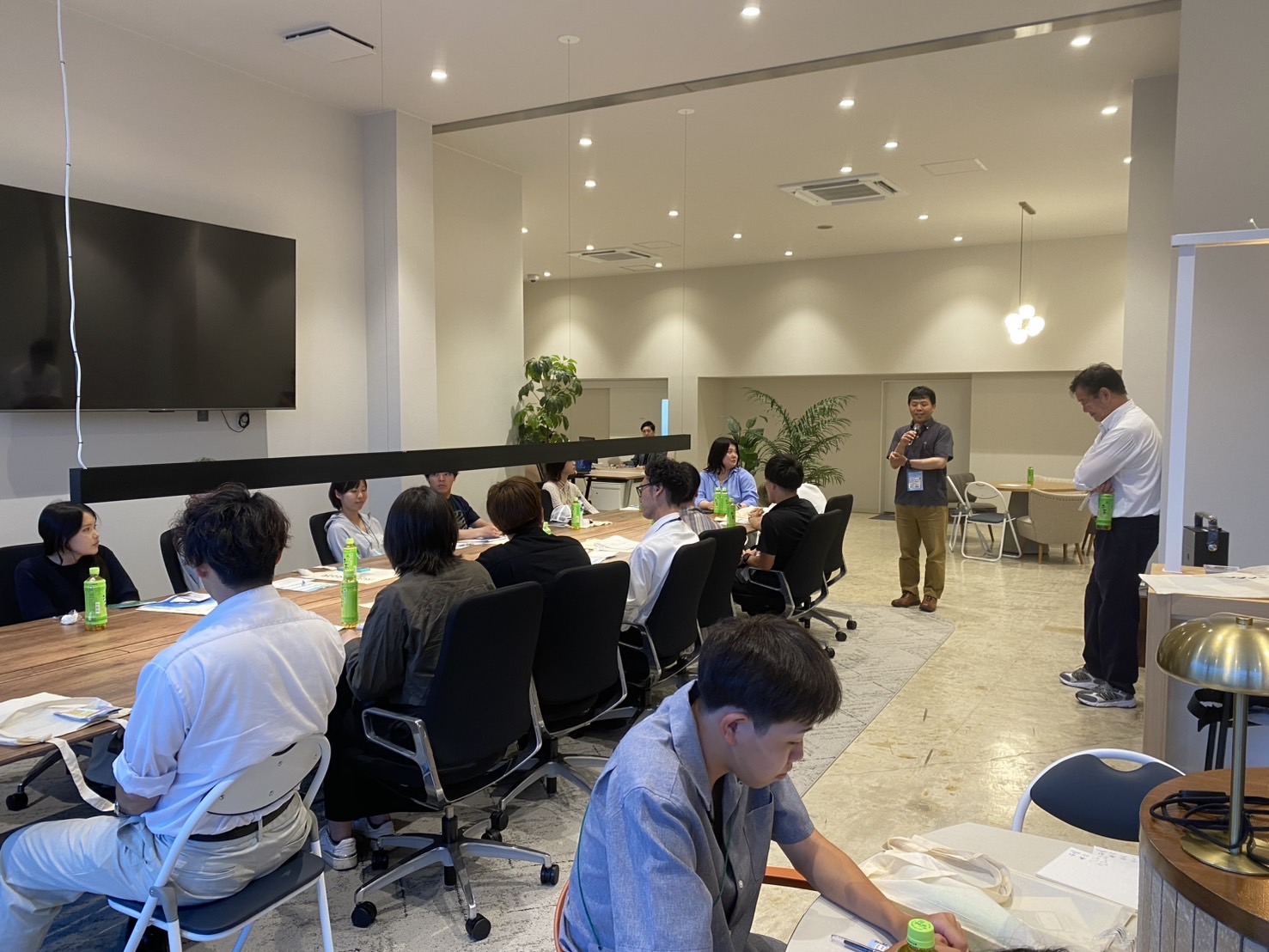
The group assembled at the 4th-floor hall of Choshi Shoko Credit Union, a sleek open-plan office space where staff work at hot desks. The room, scented with aromatherapy diffusers, was specially opened for the occasion. After a briefing, two companies delivered guest presentations. Little Flavor's Yoshii-san — a Choshi-born professional balloon artist with multiple national and international titles — demonstrated and coached participants as each group created a balloon flower and shot social-media videos. The results ranged from "flowers of seven-ring bursts" to dreamy slow-motion footage.
Morikou Fishing Net President Morita then presented on the work of net repair, followed by a factory visit. Participants were surprised to learn that fishing nets take their rust-brown color from persimmon-tannin dyeing dating back to the Edo period, and that it takes sixty years to become a fully skilled craftsperson. The breadth of the industry — from purse-seine nets to underwater-drone netting — was evident in the factory, where many young employees were working with intense focus.
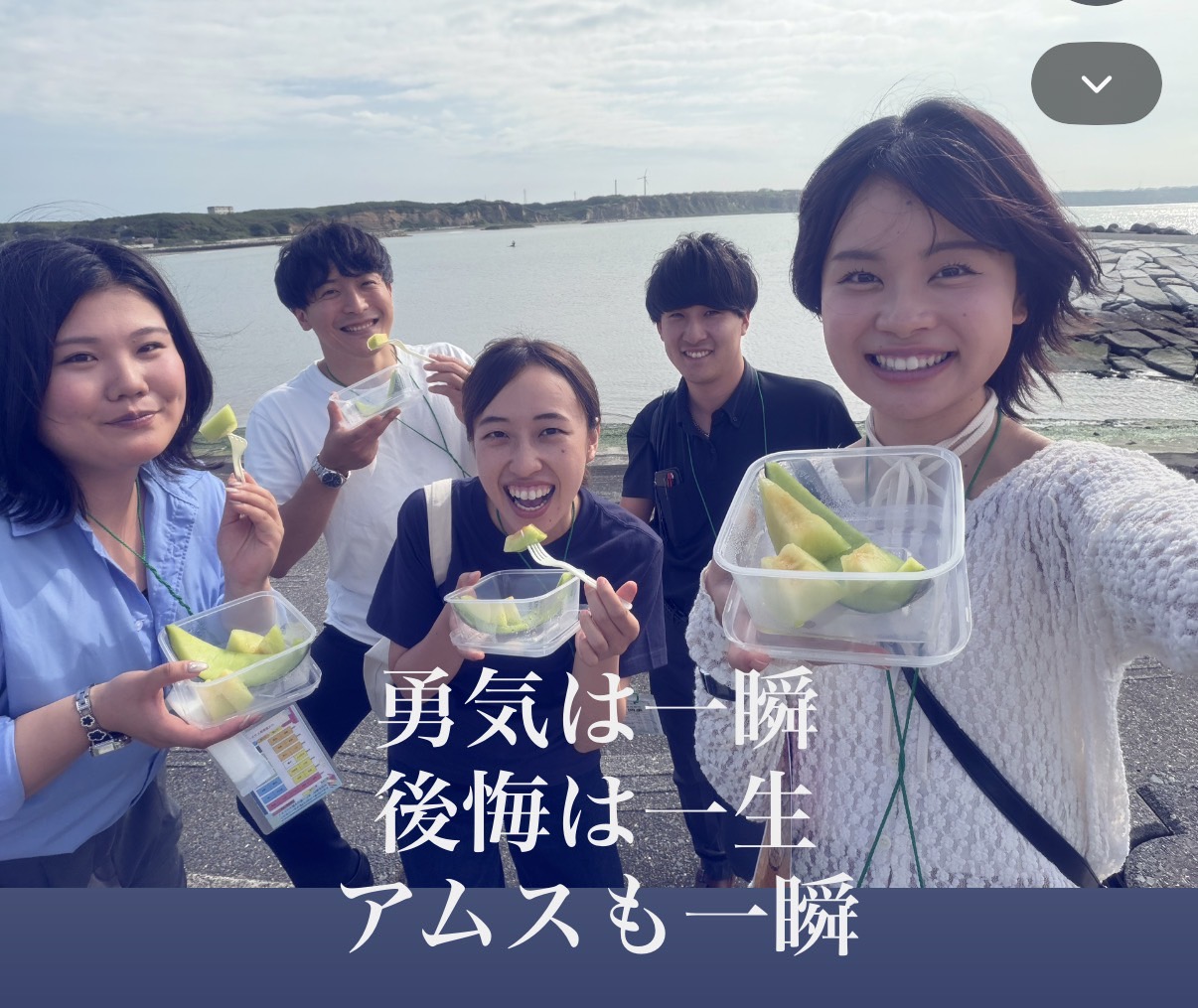
At Choshi Marina, participants tasted Choshi-produced Ams melons and brainstormed catchphrases. The winning line — "Courage lasts a moment, regret lasts a lifetime. Ams melon lasts a moment too." — brought down the house and perfectly captured the melon's fleeting sweetness.
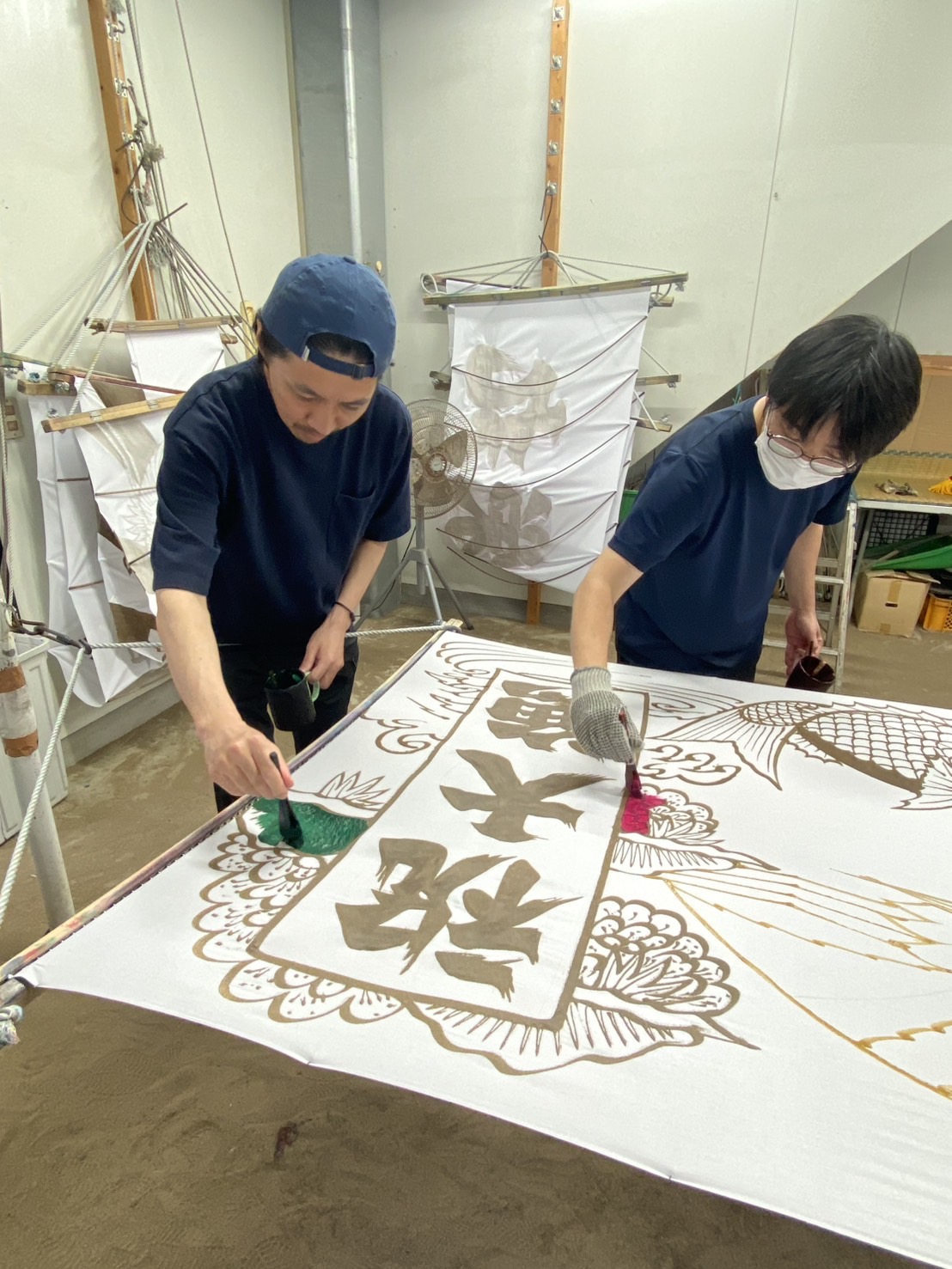
At Ozawa Dyeing Factory, participants watched the brothers sketch and paint a full celebration flag (tairyo-ki) in a single pass with no draft sketch — a breathtaking display of craft. The sight of each flag hand-dyed on a sandy earthen floor silenced the room.
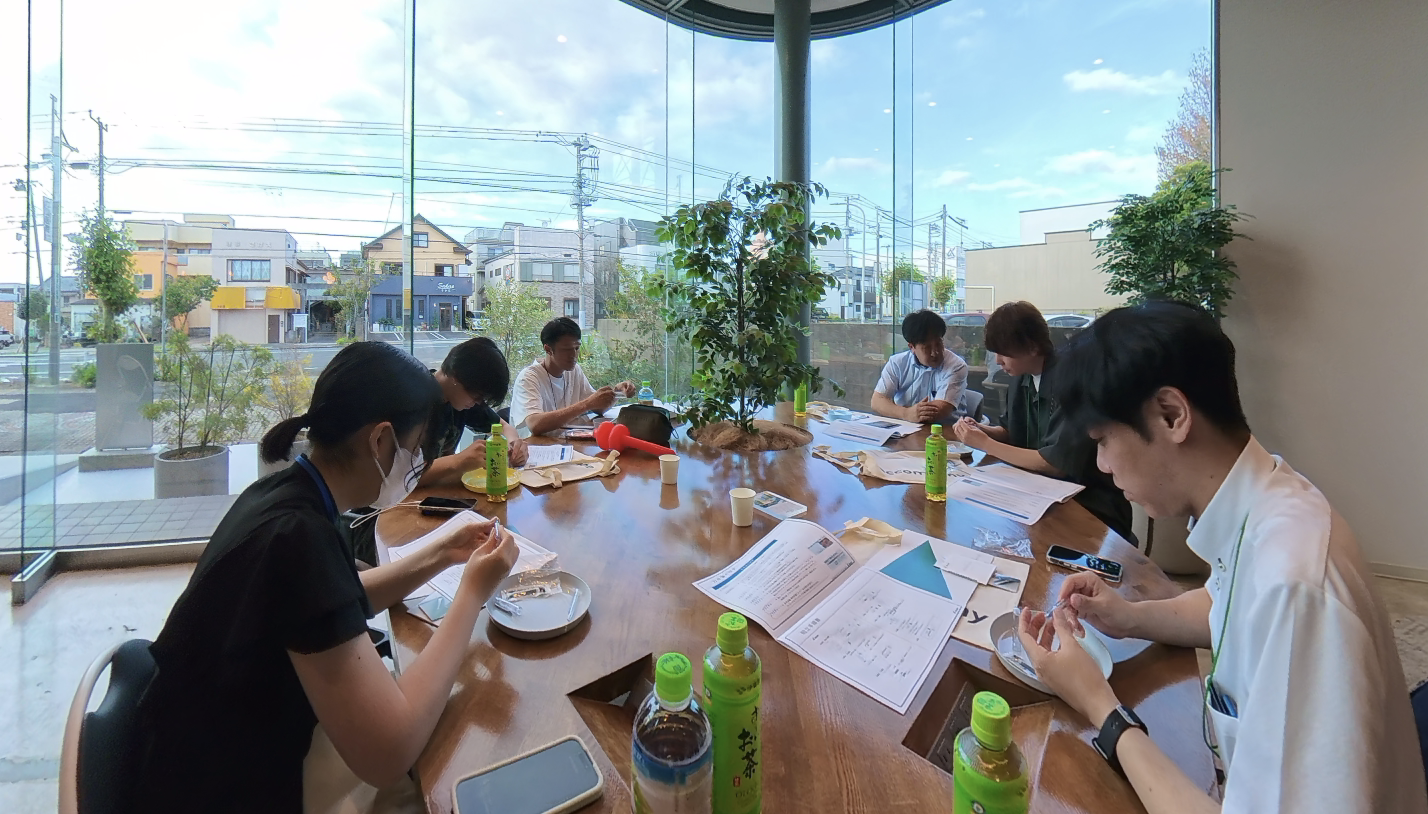
The final stop was Toraya Co., Ltd., celebrating its 80th anniversary. After President Endo explained fountain-pen construction in detail, everyone assembled their own pen to take home. A closing group workshop on "Choshi's proudest assets" sparked lively debate that carried on through the social gathering afterward.


With each visit I feel closer to the people of Choshi. At first I was nervous every time, but now I feel like I'm coming home. That's because so many people warmly welcome us back — people who have taken us to so many places and whose faces we keep seeing. Every visit reminds me why I want to come again, and that's exactly why I want to widen this circle and carry Choshi's energy to people outside the region.
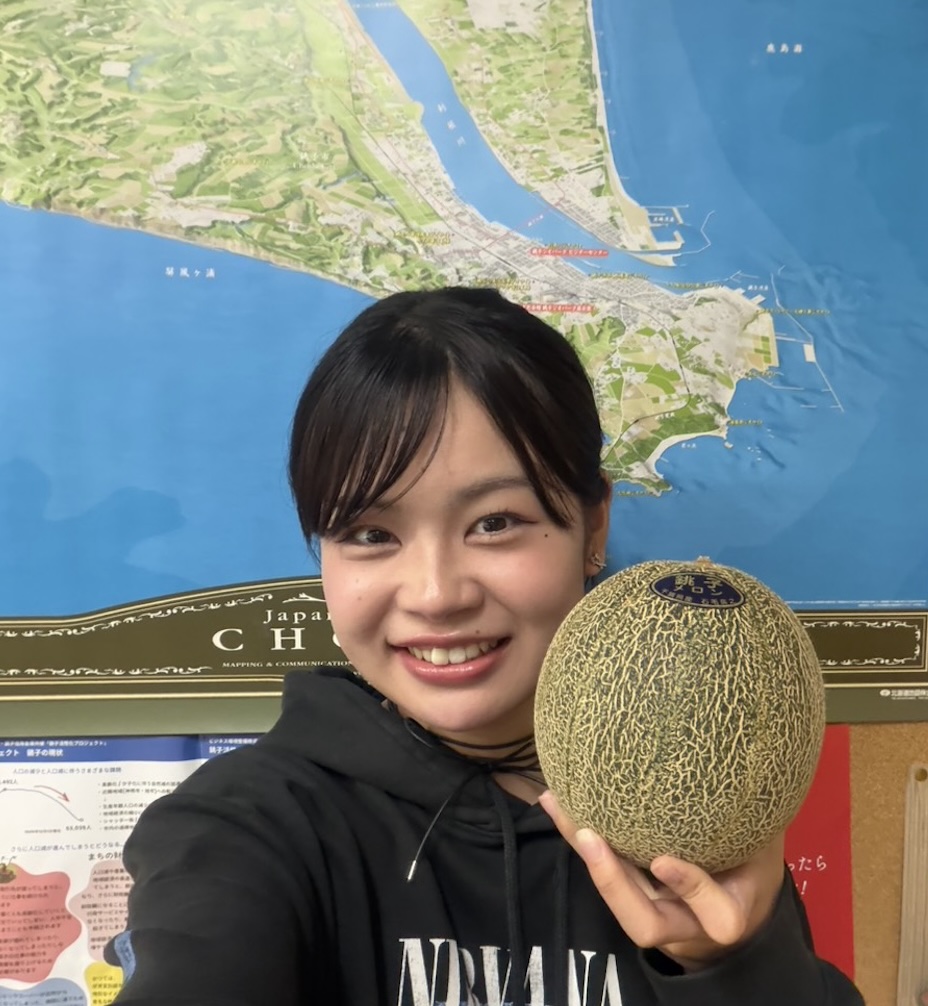
Through conversations with people in Choshi, I keep learning how much pride and love they have for their community. That depth of feeling is hard to see on a single visit. That's precisely why people from outside need to be involved. I see it as our role as students to rediscover Choshi's appeal through outside eyes and share it with the world.
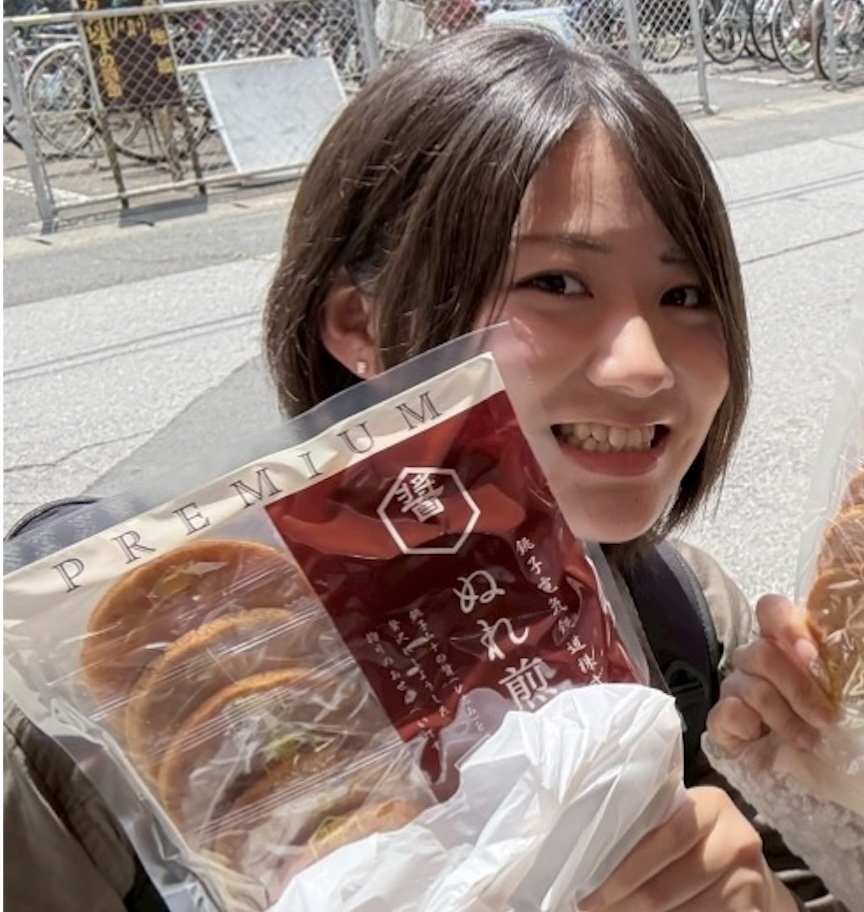 Pal
PalIt was my first time in Choshi, and actually walking around the area made me realize there was so much appeal that you can't see from outside. Everyone at every venue welcomed us warmly and talked about their work and about Choshi with such energy. I felt that the true depth of a place only becomes visible when you visit and connect with its people.
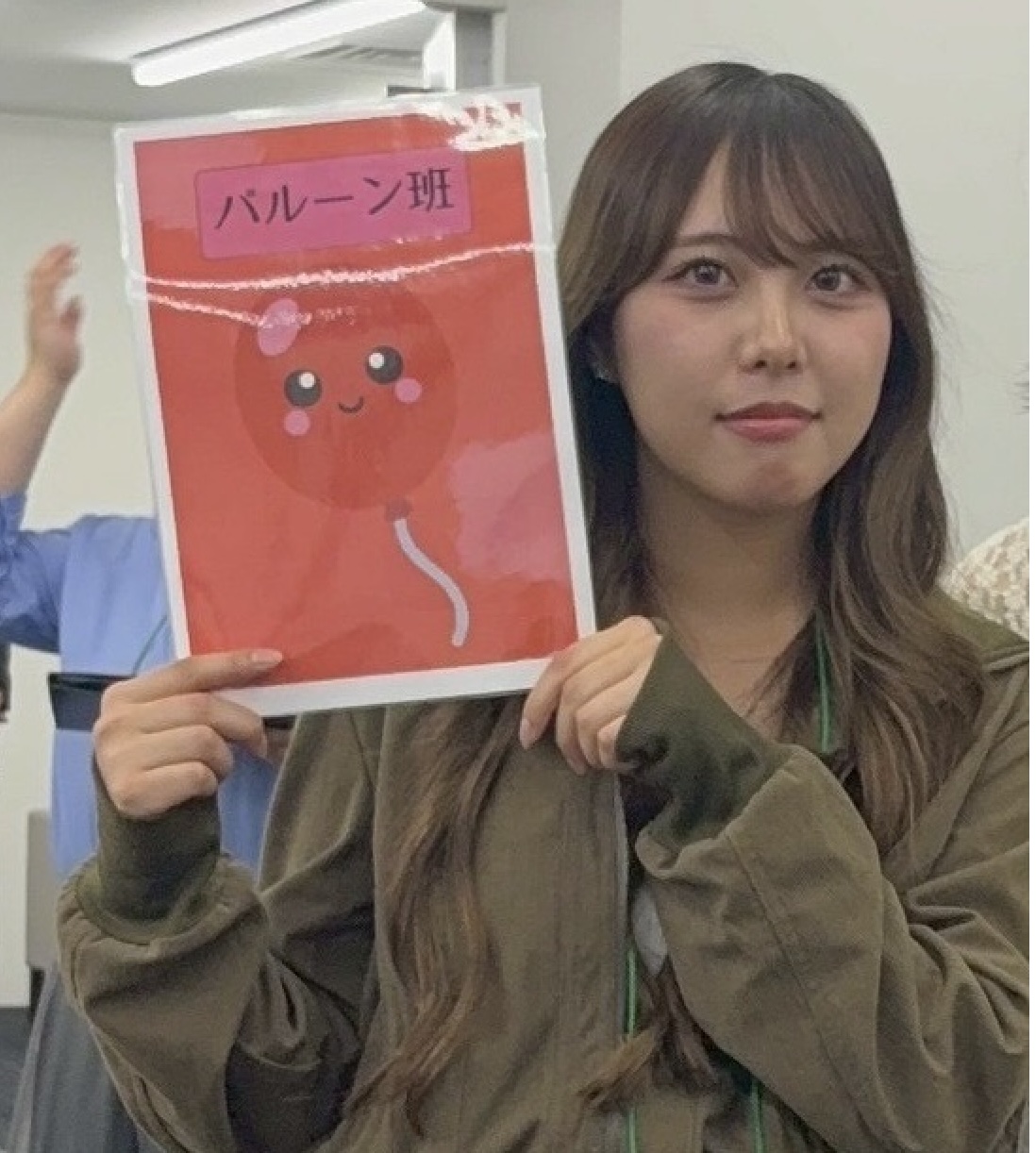 Li
Li
To request a copy, please contact acc.morokami@gmail.com.
▶ Group missions (examples)
- Deliver a one-minute talk conveying the appeal of seaweed — Choshi's soul food
- Propose a compelling "Choshi souvenir set" combining Edono Foods products
- Take a photo that makes tourists think "I want to try a vegetable experience in Choshi!"
- Create a catchphrase that makes visitors want to buy traditional brewed products as souvenirs
- A local resident gives students a 3-minute pitch on their favorite Choshi food resource
To request a copy, please contact acc.morokami@gmail.com.
To request a copy, please contact acc.morokami@gmail.com.
To request a copy, please contact acc.morokami@gmail.com.
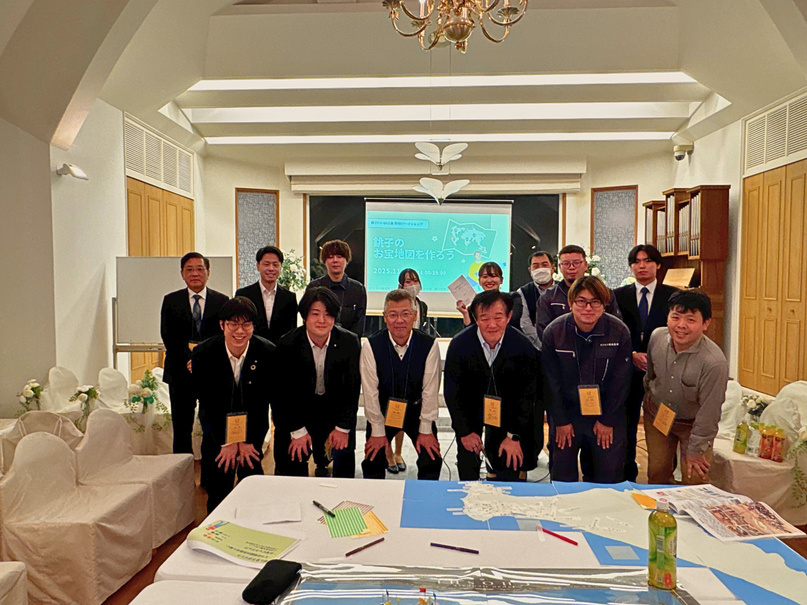
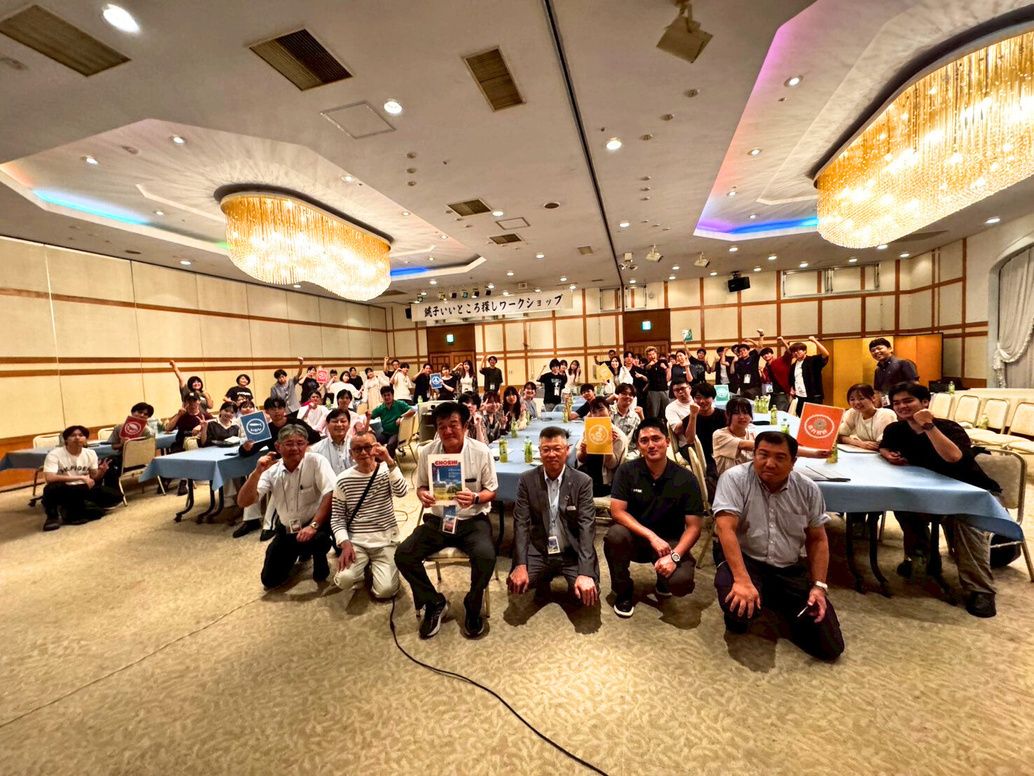
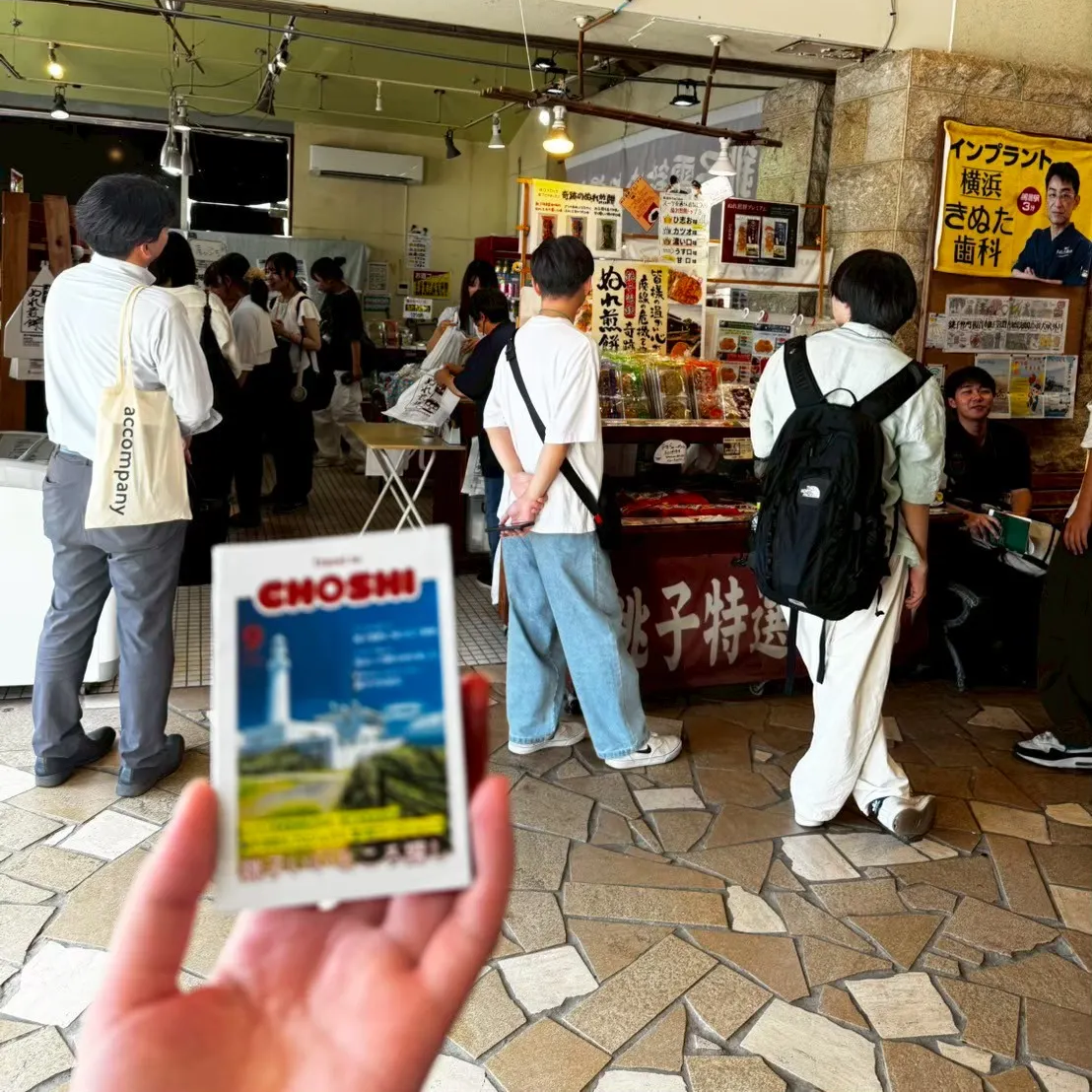
That evening, after a humor-filled talk by Choshi Dentetsu President Takemoto, participants gathered for a BBQ social with locally-brewed "Choshi Ale" (provided by Kaneshima Kensetsu's Chairman Kaneshima) and large clams provided by Shimacho Suisan. Conversations continued past midnight. On day two, the group bus-toured the "wet sembei" (rice cracker) hand-baking experience, the Globe-View Hill Observatory, a seafood lunch at Wosse 21, and ended with final presentations at the scenic Inubosaki Hotel. After the closing, people were exchanging contacts everywhere and reluctant to part ways.
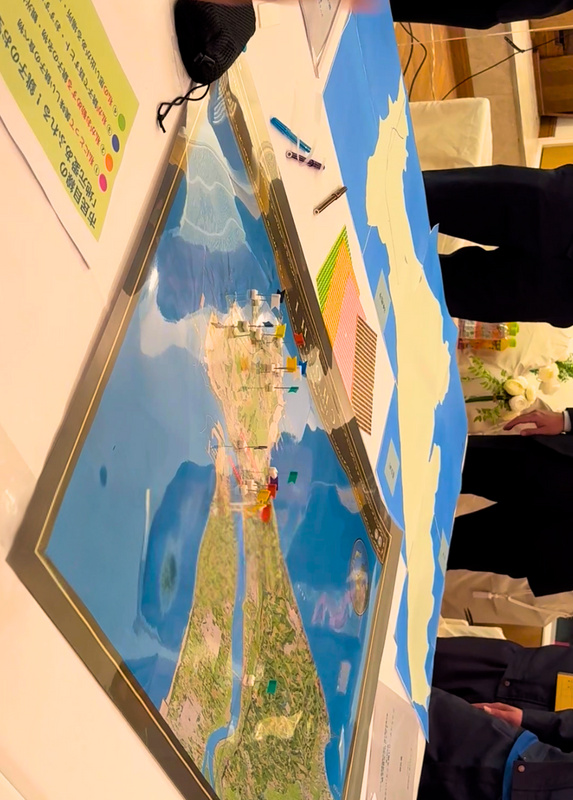
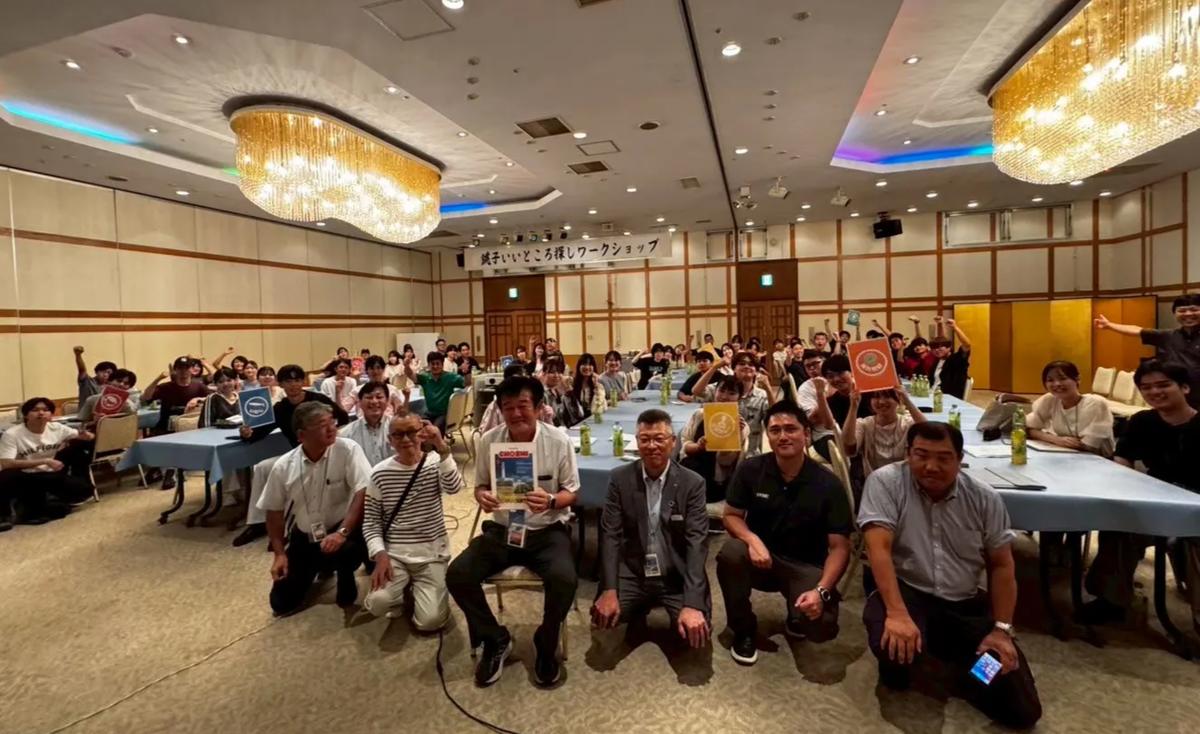
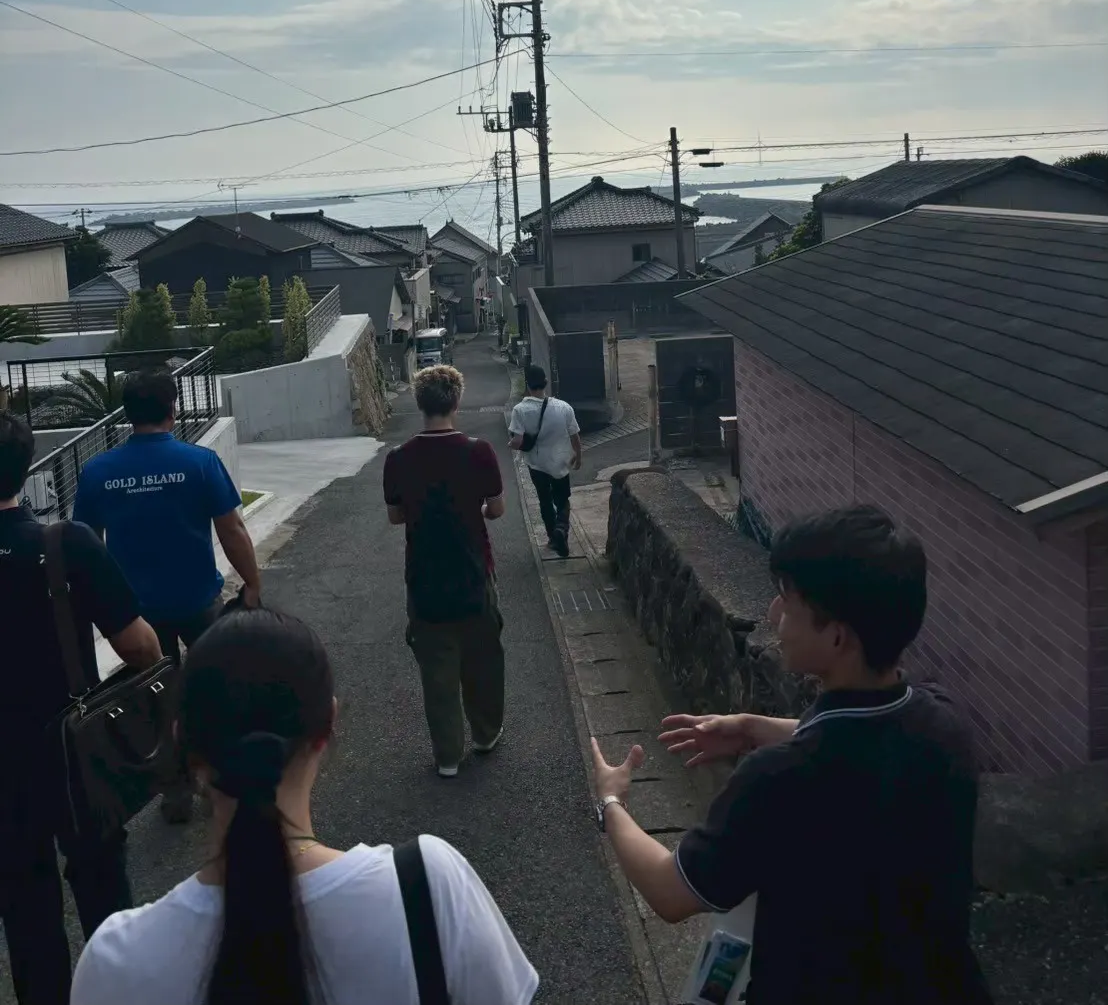
The single greatest discovery shared by every group: the warmth of Choshi's people. Local residents who spontaneously started chatting with complete-stranger students left a deep impression on everyone who came from outside. The insights gathered in this session have been the starting point for every workshop that followed.
To request a copy, please contact acc.morokami@gmail.com.
What We've Learned About Choshi Together
Recurring discoveries from multiple sessions, and the questions this project continues to grapple with.
The warmth of the people
Locals who spontaneously talk to complete-stranger travelers — this was the unanimous top finding of Session 1. It came up again in Sessions 2 and 3 from both insiders and outsiders, and has settled as Choshi's most fundamental resource.
Insiders and outsiders see different Choshis
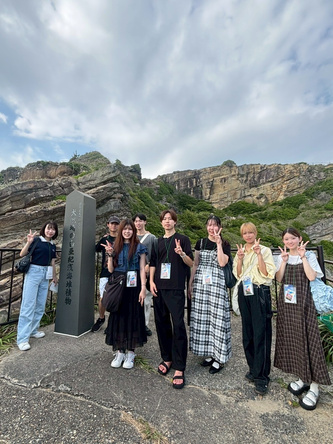
The "Toei Rocks" is a famous filming location for visitors, yet most local participants didn't know exactly where it was. Conversely, everyday local pride — favorite restaurants, community ties — is invisible to outsiders. This asymmetry is at the core of what this project is investigating.
Choshi's appeal is multifaceted
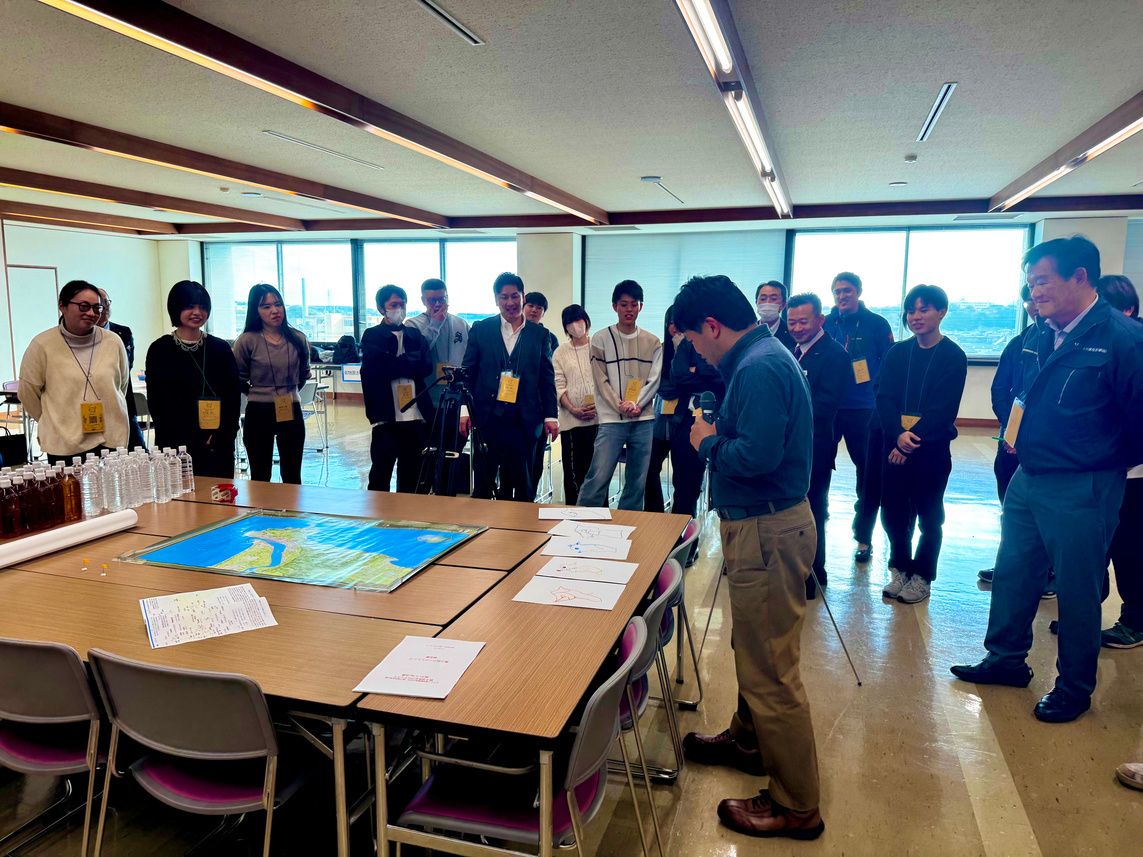
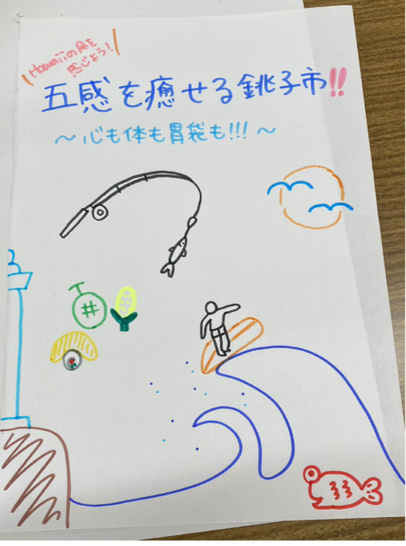
Session 3's ad-creation exercise produced five completely different angles on the same Choshi sea: girls' trip, Choshi retro, biker tourism, urban escapism, and hidden power spots. Each was convincing, showing that Choshi can shine from many directions.
The depth of food and fermentation
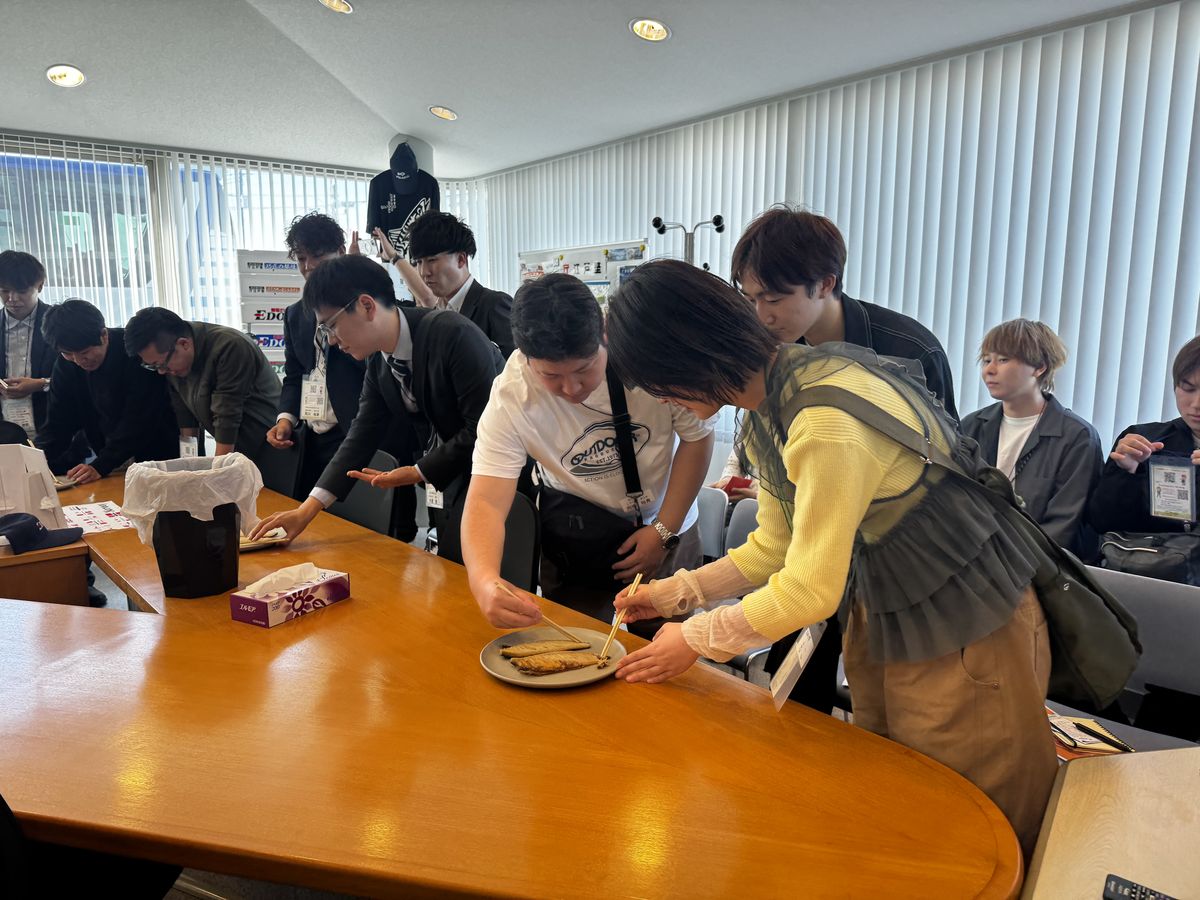
Seaweed, seafood processing, farming, soy sauce, hishio, and Choshi wine — all in one town. Session 4's field trip brought home just how deep this goes. Food in Choshi is not just a tourist draw; it is industry and livelihood that underpins the regional brand.
Community-rooted people are driving the project
The research materials entrusted to us by Choshi Yamaju's President Muroi; Chairman Kaneshima (Kaneshima Kensetsu) and President Niike (Business Kankyo Seibi) personally driving students around the city — Choshi has adults who genuinely accompany young people's activities. Asking nothing in return, they keep showing up. That is the deepest foundation of this project.
Baseball shapes community identity
Ask what comes to mind about Choshi, and people of a certain age instantly say "baseball." Talk about Choshi Commercial's trips to Koshien, and voices heat up. To an outsider this passion stands out vividly. Choshi is a place that makes you think hard about what shapes a community's identity.
"Ordinary sea" as untapped potential
Students visiting Choshi are always struck first by how close and beautiful the sea is. Yet locals often shrug: "The sea? Meh..." Immersed in daily life, they don't register it as an appeal. If what strikes outsiders as Choshi's greatest asset is still underutilized — that is a huge opportunity waiting to be realized.
Latent energy in young locals — waiting to connect
A small number of young people are returning to Choshi after gaining experience elsewhere and starting businesses or taking over family firms. Each has real capability, but horizontal connections among them are still thin. When those connections form, Choshi may move powerfully. Creating those connections is one of the long-term aims of this project.
Scattered assets, no unifying story yet
Choshi has wonderful resources in food, industry, history, nature, and people. But they have not yet woven into a single narrative that many people share and say "this is Choshi." How to weave it — and how to make people want to keep supporting it — may be the most fundamental question this project faces.
To our participating organizations
This project was born from encounters with people who love Choshi and think seriously about its future — those who opened their doors to us, sent their staff, and joined the conversations. Because of each of you, the Choshi Iine! Kaigi continues. Thank you, and we look forward to continuing together.
Co-organizers
Participating & Cooperating Organizations
* Includes companies visited as field-trip venues. Listed in no particular order. Updated periodically.
Participant Voices
Photo Gallery
Project Video
Choshi Iine! Kaigi — Session 2 Workshop Introduction Video